

How I Finally Stopped Checking My Phone

How I Finally Stopped Checking My Phone
I want to start with a number that genuinely shook me. When I finally turned on my phone's tracking, it told me I'd picked it up over 200 times that day.
Two hundred. Awake for about sixteen hours, that's a glance every five minutes. No wonder I couldn't finish a thought. No wonder a movie felt impossibly long. No wonder I'd "rest" all evening and wake up tired.
I'd tried to quit a dozen times — willpower, guilt, dramatic declarations. All of it failed within days. What finally worked was unglamorous, slightly boring, and didn't rely on a single app blocker. Here's the whole thing.
Quick Answer
I broke the phone-checking habit by attacking it at the level of friction and triggers, not willpower. I made the phone slightly annoying to reach, killed the cues that summoned it, and gave my hands and downtime something else to do. You don't beat a 200-times-a-day habit by trying harder. You beat it by making the bad option harder and the good option easier, until checking simply stops being the path of least resistance.
Why willpower was never going to work
Let me be blunt about the thing the self-help posts won't tell you: you are not going to out-discipline a device engineered by thousands of brilliant people to capture your attention.
The pull-to-refresh, the red badges, the infinite scroll, the unpredictable little rewards — these are designed, deliberately, to be as habit-forming as possible. Usability researchers at the Nielsen Norman Group have documented for years how interfaces engineer exactly this kind of compulsive return. Going up against that with raw willpower is like trying to out-sprint a car. You'll lose, then blame yourself for losing, which makes you feel worse, which makes you reach for the phone for comfort. It's a perfect trap.
So I stopped framing it as a willpower problem. It's an environment problem. And environment problems have environment solutions — change the surroundings, not the person. That reframing alone took the shame out of it, which mattered more than I expected.
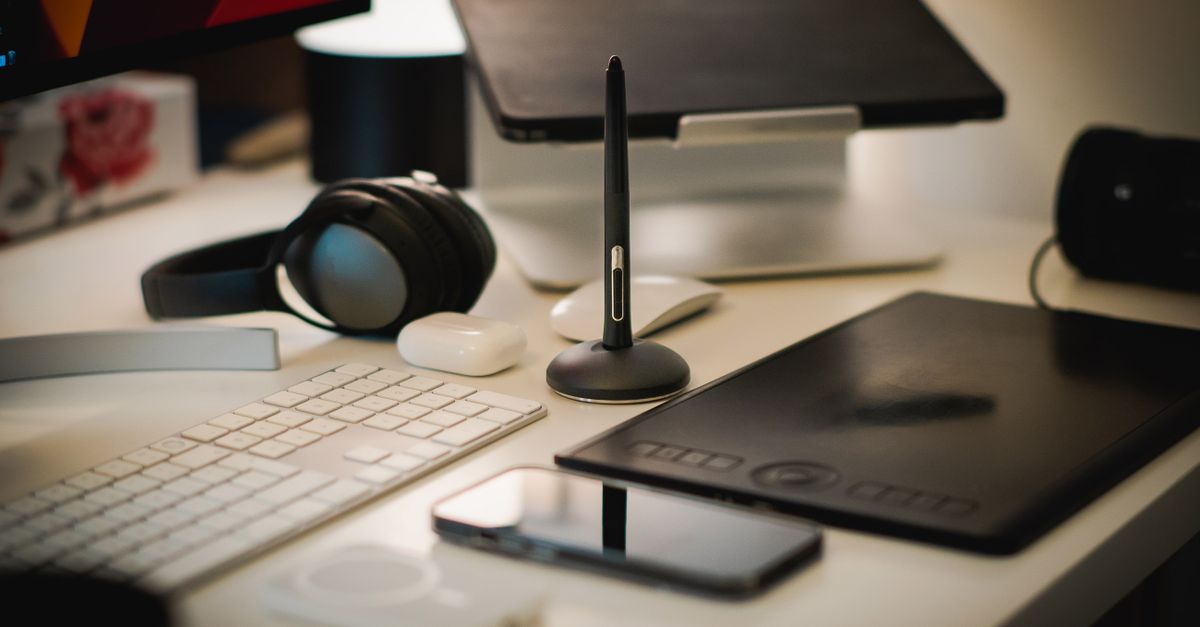 Photo by Jakub Zerdzicki on Pexels
Step one: kill the triggers
Almost every phone check starts with a cue — a buzz, a flash, a badge. Remove the cue and a stunning number of checks just never happen.
So I went nuclear on notifications. Here's the rule I landed on: a notification is only allowed to interrupt me if it comes from an actual human who needs an actual reply. That's it.
- All social and news notifications: off. Completely. If it's not a person, it can't buzz.
- Badges: off. Those little red numbers are tiny anxiety machines that exist to pull you in. Gone.
- Email: off, or batched. Email is almost never the emergency it pretends to be.
- Phone on Do Not Disturb by default, with a short list of people who can break through if it's real.
The first day with notifications off felt unnervingly quiet, like the phone had died. The second day it felt like relief. By the end of the week I realized 90% of those buzzes had never deserved my attention in the first place. I'd just trained myself to jump at all of them. Killing those triggers is what finally let me protect two hours of deep work a day — you can't defend focus while a slot machine keeps pinging you.
Step two: add friction
Killing triggers stops the reactive checks. But there's a second kind — the reflexive, bored, hand-reaches-on-its-own check. For that, you need friction.
The goal is simple: make picking up the phone require one more step than it does now. Even a tiny extra step breaks the automatic loop, because the habit runs on it being effortless.
What worked for me:
- Phone in another room during focused work and meals. The single biggest lever. Distance is friction.
- Grayscale on. A black-and-white screen is dramatically less tempting. The dopamine apps lose half their pull when they're not bright and colorful.
- The worst apps off the home screen — buried in folders, or deleted from the phone entirely and only used in a browser, which is just annoying enough.
- Logged out by default, so re-entering a password becomes a speed bump that gives the rational part of my brain a half-second to ask "do I actually want this?"
None of these are dramatic. That's the point. A 200-a-day habit dies by a thousand tiny inconveniences, not one heroic act of will.
You can't out-willpower a slot machine in your pocket. So stop carrying the slot machine in your pocket.
The dinner where I realized I was healing
There's a moment I keep coming back to. A few weeks in, I was at dinner with a friend, and halfway through I noticed my phone wasn't on the table.
Not because I'd made some grand decision to leave it. I'd just… not reached for it. The reflex that used to put it face-up beside my plate, that twitchy need to have it within glance, had quietly gone. For the first time in years I was fully there — actually listening, not half-monitoring an imaginary stream of things I might be missing.
That's when it hit me that the habit hadn't just cost me focus. It had cost me presence. Hundreds of little exits from my own life, every day, to go check on nothing. Getting that back was worth more than any productivity gain.
 Photo by Cup of Couple on Pexels
Step three: replace the reach with something better
Here's the part people skip, and it's why most digital-minimalism attempts fail. The phone isn't just a habit — it's filling a void. Boredom, anxiety, the discomfort of a quiet moment. If you remove it without filling that void, you'll crawl back.
So I gave the reach somewhere else to go. A book in my bag for queues and waiting rooms. A walk for restlessness. Actually letting myself be bored sometimes, which — as it turns out — is where ideas come from anyway.
And I leaned on automation to remove the reasons I kept "needing" to check. When small tasks and routine messages are handled by AI assistants and simple automations in the background, there's genuinely less to monitor. A lot of compulsive checking is just anxiety about an inbox or a feed; quiet the source and the urge softens on its own.
The replacement matters because nature abhors a vacuum, and so does your hand. Give it a book and it stops reaching for a screen.
The relapse, and what it taught me
I won't pretend the line went straight up. About a month in, I relapsed hard.
I'd had a stressful week, reinstalled one of the deleted apps "just to check something," and within two days I was back to face-down-on-the-table, glance-every-five-minutes mode. The old habit hadn't died; it had just been waiting for an opening, and stress handed it one.
Here's what that taught me, and it's the most useful thing in this whole article: the trigger for my worst phone use was never boredom. It was discomfort. Stress, anxiety, a hard feeling I didn't want to sit with — those were the real cues, and the phone was the escape hatch. When I'd removed the friction earlier, I'd treated it as a focus problem. The relapse showed me it was partly an emotional one.
So I added one more rule, and it's softer than the others: when I notice myself reaching for the phone, I pause for one breath and ask what I'm actually feeling. Usually it's not "I want to scroll." It's "I'm anxious" or "I'm avoiding that task." Naming the feeling — just naming it — takes most of the charge out of the reach. The phone stops being the answer because the question finally got asked.
I re-deleted the app the next day. The difference the second time was that I understood my own trigger, so I could meet it head-on instead of being ambushed by it. Relapse wasn't failure. It was the data I'd been missing. Reclaiming that attention was one of the first dominoes in the larger system I built to climb out of burnout — start with one piece of friction today and see what the next reach feels like.
The bottom line
I didn't beat a 200-times-a-day habit by becoming more disciplined. I beat it by making my phone slightly annoying, killing the buzzes that summoned it, and giving my restless hands something better to hold.
It was never a willpower failure. It was an environment I'd let a billion-dollar industry design for me. Redesign the environment, and the habit starves without a fight.
So before you try to quit through sheer grit again, ask the better question: what tiny piece of friction, added today, would make the next reach for your phone just annoying enough to skip?
Key Takeaways
- Turn off all non-human notifications (social media, news, email badges) to eliminate reactive phone checks—only allow interruptions from people who need a real reply.
- Add physical and digital friction: keep the phone in another room during work/meals, use grayscale mode, bury distracting apps in folders, and log out of addictive apps to break automatic reaching.
- Replace the phone habit with a physical alternative (e.g., carry a book, take a walk) to fill the void left by compulsive checking—boredom and restlessness need an outlet.
- Recognize that relapse often stems from emotional discomfort (stress, anxiety) rather than boredom; pause to name the feeling before reaching for the phone to short-circuit the escape reflex.
- Use Do Not Disturb as the default setting, with a short allowlist for urgent contacts, to protect focus and reduce the illusion of constant emergencies.
Frequently Asked Questions
Don't I need my phone for work?
Sure — for specific tasks, at specific times. The goal isn't no phone; it's intentional phone. Use it on purpose, then put it down. The enemy is the reflexive, purposeless check, not the tool itself.
Do app blockers work?
They can help as friction, but they're easily overridden in a weak moment, and fighting your own blocker just trains the override. Physical distance — phone in another room — beats software almost every time.
How long until the urge fades?
The sharp pull eases within a week or two of consistent friction. The reflex takes longer. Expect to catch your hand reaching for "nothing" for a while; that's the old route firing, and it fades the more you don't follow it.
What about the fear of missing something important?
Genuinely important things reach you through people, and you can let those people break through Do Not Disturb. Almost everything else can wait an hour. The "emergency" framing is mostly the apps protecting their grip.



Comments
Sign in to join the conversation
No comments yet. Be the first to share your thoughts!