
A few months ago, an AI detector told me that something I'd written entirely by hand was "98% AI-generated."
I'd typed every word. No tools, no autocomplete beyond spellcheck. And a piece of software was confidently telling a client that I'd faked it.
That moment sent me down a rabbit hole. I tested detectors for weeks — feeding them my own old writing, AI drafts, mixed pieces, classic literature, everything I could think of. What I found changed how I think about this whole panic. And if you write anything that gets checked, you should know it too.
AI detectors don't detect AI. They detect patterns — clean grammar, predictable word choices, even sentence rhythm — and guess. Human writing that's polished and plain reads "AI" to them. Sloppy AI writing reads "human." They produce false positives constantly, especially against non-native English and clear, simple prose. You can't rely on them to prove anything, and you shouldn't write to please them.
Under the hood, most AI detectors measure two things with intimidating names: perplexity and burstiness.
Perplexity is roughly "how surprised is a language model by the next word?" AI tends to pick the statistically likely next word, so AI text has low perplexity — it's predictable. Burstiness is the variation in sentence length and structure. Humans write in bursts: a long winding sentence, then a short one. AI tends to be more even.
So a detector flags text that is predictable and evenly paced. That sounds reasonable until you realize what kind of human writing is also predictable and evenly paced: anything edited to be clear.
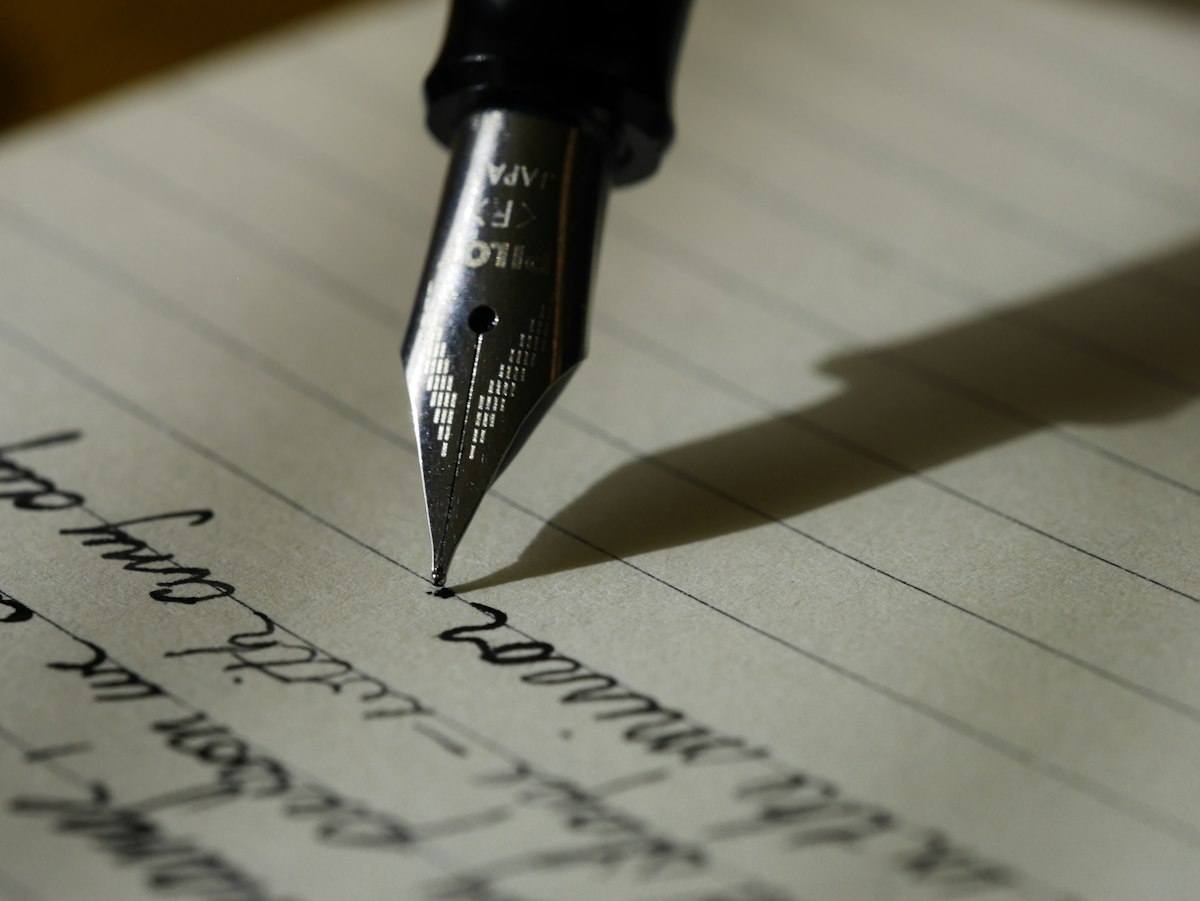
The cleaner you write, the more "AI" you look. That's the trap. Years of being told to cut filler, vary nothing for the sake of variety, and write simply — that advice makes your prose smooth, and smooth reads as synthetic to these tools.
Here's the part that should worry anyone using these tools to make decisions.
When I ran older, hand-written work through several detectors, a meaningful chunk got flagged as AI. Pieces I wrote years before these models existed. I also ran a few famous passages of public-domain literature through them — the kind of prose held up as great writing — and watched detectors call them machine-made.
The most uncomfortable finding: text written by people who learned English as a second language gets flagged far more often. Their vocabulary tends to be more standard, their structures more regular — exactly the signals detectors punish. There's published research showing this bias clearly, and it lines up with everything I'd argue in the honest truth about AI productivity tools: the confident-looking output hides a shaky foundation. It means the people most likely to be wrongly accused are often the ones with the least power to push back.
A tool that confidently flags Shakespeare and second-language students as fraudulent isn't detecting AI. It's detecting clarity, and calling it a crime.
After I got flagged, my first instinct was dumb but human: make my writing "messier" so the detector would pass it. Add weird sentence lengths. Throw in odd word choices. Break the rhythm on purpose.
It worked. The score dropped. My writing also got worse.
That's the real cost. When you optimize for the detector, you optimize against the reader. Good writing is clear and easy to follow. Detector-friendly writing is lumpy and strange. You can't fully serve both, and the reader is the one who matters.
So I stopped. I write to be understood, and I accept that a flawed tool might occasionally mislabel me. That's a better trade than sabotaging my own work to please a guessing machine.
None of this means "AI writing is fine, ship it raw." It isn't, and detectors aren't the reason. Here's the line I actually use.

This is the part that matters for anyone building a body of work. The goal was never "undetectable." The goal is writing worth reading. AI-powered blogging and content tools can speed up the boring parts, but the judgment, the voice, and the responsibility stay with you. It's the same line I drew when I wrote about using AI to edit rather than write for me — the model sharpens the work; it doesn't get to sign it.
If you publish online, you've probably heard the fear: "AI content gets penalized." The honest version is more nuanced.
Search engines don't run the same crude detectors and rank you down for "AI smell." They care about whether the content is useful, accurate, and original. Thin, generic, mass-produced pages do poorly — but they'd do poorly whether a human or a machine churned them out. The problem isn't the tool. It's the laziness.
So the SEO move isn't "avoid AI to dodge detection." It's "add something only you could add" — real experience, real data, a real opinion. That's also, conveniently, what makes writing worth a human's time. The detector debate and the quality debate keep collapsing into the same answer.
After the rabbit hole, I didn't swear off AI and I didn't start writing to beat detectors. I changed three concrete things, and they've held up.
First, I keep a visible trail. Every serious piece lives in a document with version history, so the messy evolution from outline to draft to final is recorded. If anyone ever questions a piece, I don't argue about a score — I show the process. A real trail of drafts is the only proof that actually means anything, and it protects you in both directions.
Second, I stopped treating "smooth" as the goal. For a while I'd polished my writing until it was frictionless and, it turns out, faintly robotic. Now I let my actual voice through — the asides, the opinions, the occasional blunt sentence. Not to fool a detector, but because that's the writing people remember. The irony is that writing more like myself also happens to read less like a machine.
Third, I got specific about where AI helps. It's a thinking partner and a first-reader, not a ghostwriter. I'll ask it to find the weak point in my argument, to list the objections I'm dodging, to tell me what a skeptical reader would push back on. Then I write the actual words. The model sharpens my thinking; it doesn't replace my voice. That line is the whole thing, and once I drew it clearly, the detector panic stopped mattering to me at all.
If you write anything that gets checked, try keeping a visible drafting trail for a month and see how much calmer the whole detector question becomes — it's a small habit that quietly protects you.
Q: Can AI detectors be trusted at all? Not as proof. Treat them as a weak signal at best. A flag should start a conversation, never end one. Acting on a detector score as if it were evidence is how innocent people get punished.
Q: My school or client uses one. What do I do? Keep your drafts and version history. If you write in stages with a visible trail, you can show your process. That's far stronger proof than any score, in either direction.
Q: Will detectors get better? Marginally, but they're chasing a moving target. As AI writing gets more human, the line gets blurrier, not sharper. The fundamental problem — that clear human writing looks "AI" — doesn't go away.
Q: Does running text through a "humanizer" tool help? It changes the score, not the quality. Usually it makes prose worse. You're paying to damage your own writing so a flawed tool approves of it. I wouldn't.
Q: If detectors are unreliable, why do institutions still use them? Mostly because they want a simple answer to a hard question, and a percentage feels like one. But a number that's wrong this often isn't a simple answer — it's a confident guess dressed up as evidence. The more people understand how these tools actually work, the less weight they'll carry. Until then, protect yourself with a visible drafting trail and push back when a score gets treated as proof.
I got accused by a machine of faking work I'd done with my own hands. The fix wasn't to write worse so the machine would approve. The fix was to stop treating the machine's opinion as the truth.
AI detectors measure clarity and call it deception. Don't reorganize your craft around a tool that can't tell Shakespeare from a chatbot.
Write like a person who has something to say. If a detector flags that, the detector is the broken part.
The next time a score tries to tell you who you are, ask it to explain its reasoning. It can't. That's the whole story.
No following, no network, no luck. Just an unglamorous system I ran for eighteen months. Here's exactly what I did.

I went from 200 to 11,000 subscribers without hiring anyone. AI didn't write my newsletter — it did everything around it.

One person, output that looks like five. It isn't about working more hours — it's about a kind of leverage teams rarely have.





Comments
Sign in to join the conversation
No comments yet. Be the first to share your thoughts!