

How I Use AI to Write Better, Not Faster


How I Use AI to Write Better, Not Faster
For about a year I used AI the way most people do. I typed a vague prompt, watched a wall of text appear, skimmed it, and shipped something I didn't really mean.
The writing got faster. It also got worse. Blander. Smoother in the way a hotel lobby is smooth.
Then I flipped the whole thing around. I stopped asking AI to write for me and started asking it to make me write better. That one change is the reason I still publish.
Quick Answer
If you want AI to improve your writing instead of flattening it, do the opposite of the default. Write the messy first draft yourself, then use AI as an editor, sparring partner, and reverse-outliner — never as the author. Speed is a side effect, not the goal.
The short version:
- Draft first, prompt second.
- Use AI to interrogate your draft, not to generate one.
- Keep your voice as the non-negotiable.
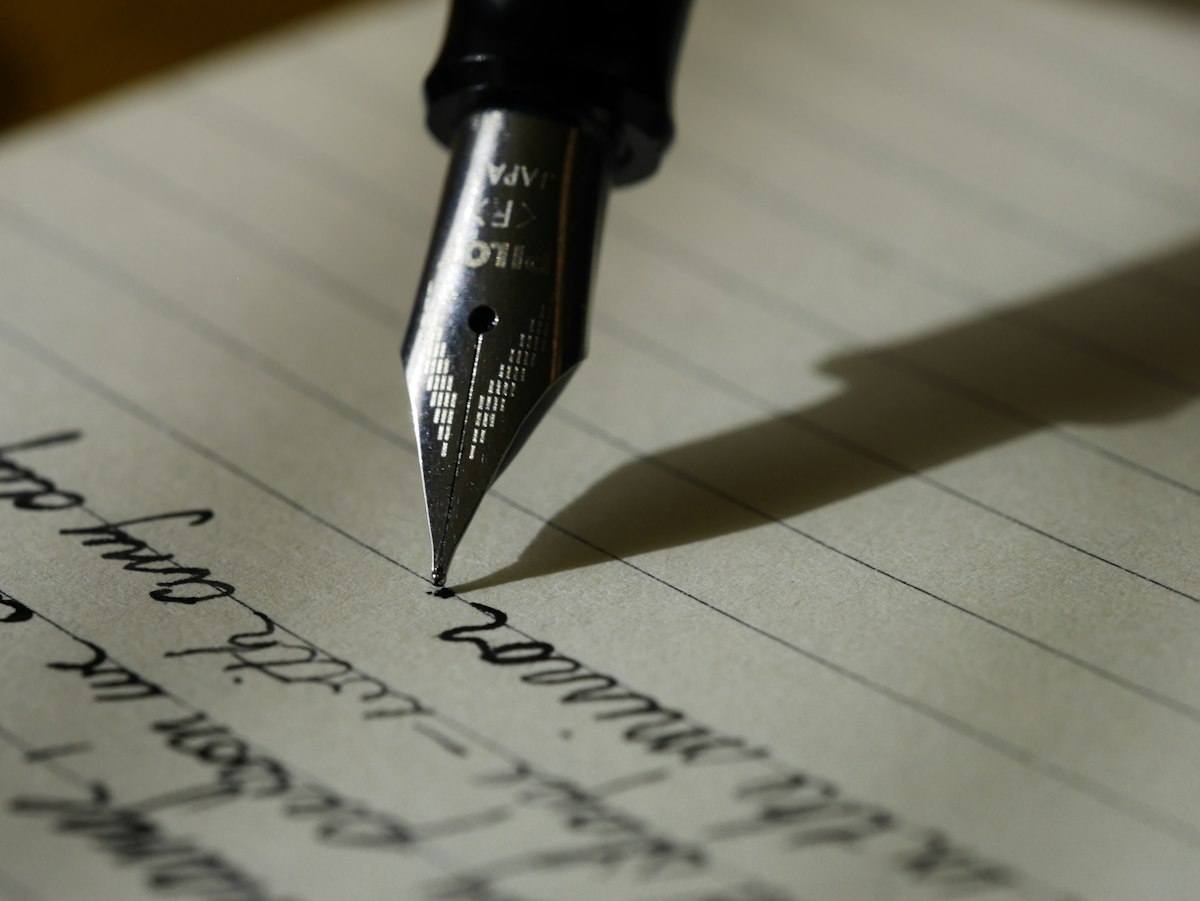
 Photo by Bedia on Pexels
The mistake almost everyone makes
The default move is "write me a blog post about X." It feels productive. You get 800 words in nine seconds.
But here's the thing nobody admits: those 800 words are the average of everything ever written about X. By definition they say nothing new. They can't. The model is predicting the most likely next word, and the most likely word is the least surprising one.
So if you start from the AI draft, you start from the middle of the bell curve. Every edit you make is just dragging it slightly back toward yourself, and you usually give up halfway. It's the same trap I keep running into across the honest truth about AI productivity tools: the tool feels like progress while quietly flattening the thing that made your work yours.
The order matters more than the tool. Start with you, and AI sharpens you. Start with AI, and you sand off your own edges.
My actual workflow, step by step
Here's what I do now, every single piece.
- Brain-dump the draft myself. Ugly, unstructured, full of half-thoughts. No AI. This is where the actual ideas live.
- Paste it in and ask for a reverse outline. "Summarize the argument of each paragraph in one line." This instantly shows me where I rambled or repeated myself.
- Ask it to argue back. "What's the strongest objection a smart skeptic would raise?" This is the single most valuable prompt I use.
- Line edits last. Only at the end do I ask for tighter phrasing, and even then I reject most of it.
Notice that AI never writes a sentence that ships. It pressure-tests the thing I already made.
The prompt that changed everything
For two years my drafts had a quiet problem: I'd assert things without earning them. A friend pointed it out and I got defensive, then realized he was right.
Now I run one prompt on every draft:
"Point to every claim I make that I haven't supported with a reason, an example, or evidence. Don't rewrite anything. Just list them."
It's brutal. It usually finds six or seven. And because it's not rewriting — just flagging — the fixes are mine. The voice stays intact. The argument gets stronger.
That's the whole trick. AI is a fantastic critic and a mediocre author. Use it where it's strong — a reframe close to what I argue in why AI won't make you productive on its own, where the tool only ever amplifies the judgment you bring it. Research from Harvard Business Review on how knowledge workers actually adopt AI points the same way: the gains come from supervision and editing, not blind generation.
 Photo by Zen Chung on Pexels
The five prompts I actually use
People always want the prompts, so here they are. None of them generate prose. Every one of them makes my own prose better.
- The reverse outline. "Summarize each paragraph in one sentence." If two summaries say the same thing, I've repeated myself and didn't notice.
- The skeptic. "What's the strongest objection a smart, hostile reader would raise?" This finds the hole in my argument before a commenter does.
- The unsupported-claim hunt. "List every claim I make without backing it up. Don't rewrite." My favorite, because it leaves the fixing to me.
- The boredom check. "Which paragraph would a busy reader skip?" It's almost always right, and that paragraph almost always goes.
- The tighten pass. "Suggest tighter versions of these three sentences." Only at the very end, and I reject most suggestions.
Notice the shape. Four of the five ask AI to find problems. Only the last asks it to propose words, and even then I treat it as a menu, not a verdict.
This is the part people skip. They want one magic prompt that writes the thing. The magic isn't in any single prompt — it's in refusing to let the model author and forcing it to audit instead. The prompts above are just different flashlights pointed at the same dark corners of a draft.
What changed in my actual writing
I want to be concrete about what got better, because "my writing improved" is the kind of vague claim my own skeptic prompt would flag.
My arguments got tighter, because the skeptic prompt kept finding the weak link and I kept fixing it before publishing. My paragraphs got leaner, because the boredom check kept catching the one I'd written to hear myself talk. And — this is the surprising one — my voice got stronger, not weaker, because I was no longer starting from a bland AI baseline and dragging it halfway home.
There's a counterintuitive lesson buried in there. Using AI more made my writing sound more like me, not less — but only because of how I used it. The generation-first crowd gets the opposite result and then blames the tool.
I also stopped being precious. When you know a draft is going to get interrogated by a tireless critic, you stop trying to make the first version perfect. You just get the ideas down, ugly and fast, and trust the process to sharpen them. That alone unstuck me from years of blank-page paralysis.
Where speed actually shows up
People assume editing-first is slower. It isn't, but the speed comes from a different place.
I'm not faster at producing words. I'm faster at producing words worth keeping. My revision count dropped. I stopped publishing things I'd quietly delete a week later.
Here's the rough before-and-after from my own logs:
| Metric | AI-writes-it | AI-edits-me |
|---|---|---|
| Words per hour | High | Lower |
| Pieces I'm proud of | Few | Most |
| Times I hit publish then cringe | Often | Rare |
| Sounds like me | No | Yes |
The middle column was a treadmill. The right column is a craft.
The one rule I never break
I never let AI generate the opening line or the closing line. Those two sentences carry the whole piece — the hook and the landing. If I outsource them, the piece has no spine and no heart, and readers feel it even if they can't name it.
Everything in between can be poked, prodded, and tightened. The bookends are mine.
I learned this from publishing a piece where I'd let AI suggest the opening. It was technically fine — grammatically clean, on topic, completely dead. Nobody read past it. The version I rewrote myself, opening with a small embarrassing confession, did three times the numbers. Same article. Different first sentence. That's how much the bookends carry.
The mindset shift that matters most
If I had to compress this entire approach into one sentence, it's this: stop treating AI as a writer and start treating it as the best editor you'll ever afford.
Editors are expensive and rare. A good one reads your draft, tells you where it's lying, where it's boring, where you've assumed too much, and then hands it back for you to fix. They don't rewrite you into themselves. The whole reason a great editor is valuable is that they make your voice land harder.
That's exactly the relationship I now have with AI. It reads everything I write, instantly, without ego, as many times as I want. It never gets tired of my drafts. And it never, ever puts its own words in my mouth — because I don't let it.
The writers who'll struggle in the next few years aren't the ones who refuse AI. They're the ones who let it write for them and slowly forget what their own voice sounds like. The ones who'll thrive are using it the way I'm describing: as a mirror, a critic, a sparring partner that makes their human voice sharper every single time.
If editing-first writing sounds like a habit worth building, try running just the unsupported-claim prompt on your next draft and see what it surfaces.
The bottom line
The fastest way to sound like everyone else is to let a model write for you. The slowest, most worthwhile thing you can do is write badly first, then use AI to find out exactly why it's bad.
Use AI to make your writing more yours, not less.
So here's the question I'd sit with: the next time you open a blank page, are you reaching for the tool to avoid the hard part — or to do the hard part better? One of those makes you a writer. The other makes you an editor of a stranger's average.
Key Takeaways
- Write your messy first draft yourself—never outsource the initial ideas to AI, as starting from an AI-generated baseline flattens your unique voice and traps you in generic, predictable prose.
- Use AI as a relentless editor, not a writer: run prompts like 'Summarize each paragraph in one sentence' or 'List every unsupported claim' to expose weak arguments, repetition, or gaps before publishing.
- Run a 'skeptic prompt' on every draft ('What’s the strongest objection a smart reader would raise?') to preemptively strengthen your argument and avoid public pushback.
- Never let AI generate your opening or closing lines—these bookends define your piece’s voice and impact, and outsourcing them drains the humanity from your work.
- Treat AI’s line-editing suggestions as a menu, not a verdict: accept only the refinements that preserve your voice, and reject the rest to avoid sounding like a smoothed-over average.
- The real speed gain isn’t in faster writing—it’s in faster revision: AI’s instant feedback reduces the number of drafts needed and eliminates the cringe of publishing weak work.
Frequently Asked Questions
Doesn't this defeat the point of using AI?
No. The point was never "type less." The point is "publish better things." AI as an editor does that. AI as a ghostwriter quietly erodes the only thing you actually own — your voice.
Which tools do you use?
Honestly, it barely matters. Any capable assistant works. The workflow is the moat, not the model. I rotate between whatever's handy and the results don't change much, because I'm using it for judgment, not generation.
Won't editors and readers be able to tell?
That's exactly why this matters. Readers can smell average. When the ideas are genuinely yours and only the polish is assisted, it reads as human — because it is.
Does this work for non-writers?
Especially for non-writers. If you're insecure about your prose, the editor-first approach lets you keep your raw thinking while fixing the mechanics. It's a confidence machine, not a replacement.




Comments
Sign in to join the conversation
No comments yet. Be the first to share your thoughts!