For years I thought my overwhelm was a tooling problem. If I just found the right app, the right system, the right color-coded setup, the chaos would finally make sense.
I tried all of it. I had a beautiful task manager, a second-brain wiki, a calendar that looked like a stained-glass window. And every single morning I still woke up with that specific tightness in my chest — too much, too many, where do I even start.
The thing that actually fixed it took five minutes a day and required no new software. Here it is.
The habit is a daily shutdown plan: at the end of each workday, I spend five minutes writing down the three things that actually matter tomorrow, in order. That's it. The overwhelm wasn't from having too much to do. It was from carrying every undecided thing in my head at once. Writing it down before I stopped working let me put the load down.
Most to-do lists aren't plans. They're anxiety, transcribed.
A list of forty things tells you everything you could do and nothing about what you should do next. So you stand in front of it like a fridge full of random ingredients, paralyzed, and end up doing the easiest item instead of the most important one. Or worse — you reorganize the list and call it progress.
The fix isn't a better list. It's a decision. Every morning I used to wake up and decide what mattered, which is the worst possible time to decide anything, because the day immediately starts shouting at you. I dug into exactly why your to-do list keeps you behind once I realized the problem was never the app — it was the deciding.
So I moved the decision to the night before, when the day was already over and I had nothing left to lose.
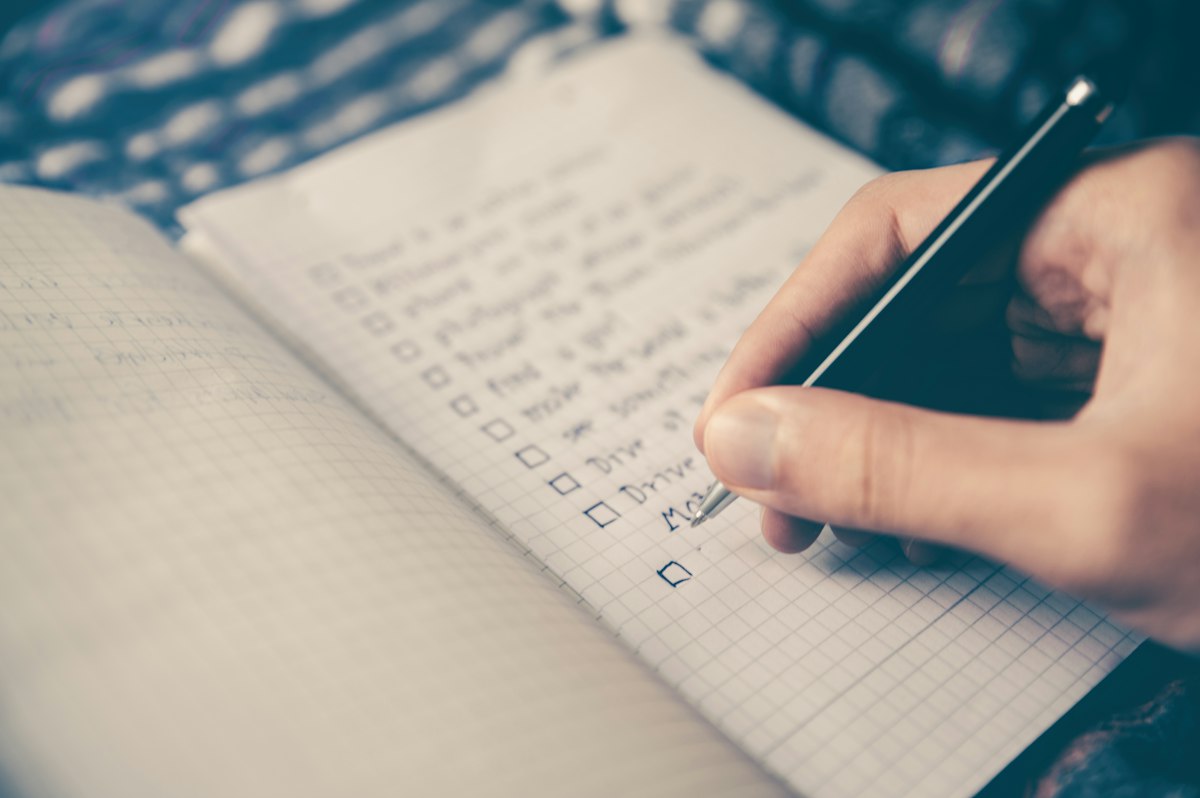
Here's the whole ritual. It runs before I close the laptop, not after dinner when I'm too fried to think.
The first physical action is the secret ingredient. "Finish the report" is a wish. "Open the doc and write the intro" is something your hands can actually do at 9am without thinking.
I remember the first evening it clicked. I'd written my three things, closed the laptop, and gone to make dinner — and halfway through chopping an onion I noticed something missing.
The hum. That low background anxiety of am I forgetting something important had gone quiet.
It turned out my brain had been running a tab all evening, every evening, just to keep the undone things from slipping away. The moment I'd written them down with a clear next step, that tab closed. I didn't need to remember anything, because tomorrow-me already had instructions.
Your mind is for having ideas, not holding them. The page remembers so you don't have to.
That's not a productivity tip. That's a sleep tip disguised as one.
I want to be specific about why this works, because "plan the night before" sounds like the kind of advice you nod at and never do.
In the morning, three things are working against you. Your willpower is fresh but unfocused. The day's demands haven't hit yet, so you underestimate them. And the moment you open any inbox or feed, someone else's priorities become yours. You sit down to plan and end up reacting.
The night before, the data is complete. You know exactly how today went, what slipped, what's urgent. You're tired, but tired is fine for deciding — it's bad for doing. Planning is deciding. You're using the right fuel for the right job.
By the time morning arrives, there's nothing to decide. You just read your own note and start. The plan was made by a calmer, better-informed version of you.

The habit only worked once I dropped some things that felt productive but weren't.
I stopped planning more than three priorities. The fourth and fifth always became guilt by lunchtime. Three is honest about how much deep focus a human day actually holds.
I stopped time-blocking every minute. The over-engineered calendars looked impressive and shattered on contact with reality. Now I block one hard slot for priority number one and let the rest flow.
And I stopped chasing the perfect tool. The whole thing runs on whatever's nearest — a notebook, a notes app, the back of an envelope. The tool was never the point. The decision was. A little automation can carry the reminders, but the choosing stays human.
I want to dwell on why this works, because the mechanism is more interesting than the habit.
Every unfinished thing in your life occupies a little slice of attention until it's either done or captured with a plan. Note the second half. It doesn't have to be done to stop nagging you — it just has to be written down with a clear next step so your brain trusts it won't be forgotten. That trust is the whole release.
Before the shutdown habit, I had dozens of these open loops running at once, all day, every day. Each one was tiny. Together they were a fog. I'd feel vaguely behind and vaguely anxious and couldn't point to why, because no single thing was the problem — the accumulation was. It's like background apps draining a phone battery. No one app is the culprit; they're all just quietly running. Researchers who study unfinished tasks call this the Zeigarnik effect, and writers like Cal Newport have built whole shutdown rituals around closing those loops on purpose.
The five-minute shutdown closes the loops in bulk. Once a day, I round them all up, give each a home and a next step, and the fog lifts. Not because the work is done — most of it isn't — but because my brain finally trusts the page to hold it.
That's why the overwhelm ended without me actually doing more work. I wasn't carrying less. I was just carrying it on paper instead of in my head, and paper doesn't get tired.
I keep saying "the Big Three," and the number isn't arbitrary. It took me a while to land on it, and it matters more than it looks.
When I let myself pick five or six priorities, something predictable happened. The list looked ambitious and made me feel responsible, and then reality showed up. Meetings ran long, one task ballooned, an emergency landed — and by lunch, items four, five, and six had quietly converted from "priorities" into "guilt." I'd end the day having done good work and still feel like a failure, because I'd measured myself against a plan that was never honest about how much a human day actually holds.
Three is honest. On a normal day, with normal interruptions, you can genuinely move three meaningful things forward. So when you finish them, you feel the rare and underrated emotion of enough — the sense that the day was a success, not a shortfall. And that feeling matters, because it's what makes you want to do the planning again tomorrow. A system that leaves you feeling defeated every day doesn't survive.
There's also a focusing effect. Forcing yourself down to three is an act of editing, and editing is where priorities actually get decided. When everything's a priority, nothing is. When you can only pick three, you're forced to ask the real question: of all this, what would I most regret not doing? That question, asked every morning, slowly turns you into someone who does the important things instead of the loud ones.
So pick three. Not because you can't do more, but because three is the number that's both achievable and honest — and honesty, it turns out, is the cure for overwhelm. If this one habit helps, it slots neatly into the larger productivity system that finally survived my burnout — try the shutdown for a week before you judge it.
Q: What if more than three things are genuinely urgent? Then your week is overcommitted and the plan is doing its job by exposing that. Pick the three that matter most today and have an honest conversation about the rest. Three real priorities beat ten pretend ones.
Q: Should I do this on weekends? I do a lighter version — one or two intentions, not a work plan. The goal is the same: decide once so you're not deciding all day.
Q: What if tomorrow blows up and the plan dies by 10am? Then you re-pick your number one and protect that. A plan isn't a contract; it's a starting direction. Even a plan that survives one hour beats no plan at all.
Q: Digital or paper? Whichever you'll actually open tomorrow. Paper has less temptation to fiddle. Digital travels with you. There's no wrong answer except "the app I forget exists."
I spent years and a lot of money believing my overwhelm was a software problem. It was a decision problem. I was making the most important decision of my day at the worst possible time, in the worst possible state, every single morning.
Move the decision to the night before, write three things and one first step, and the chaos quietly drains out of your mornings. No new app required.
So tonight, before you close the laptop: what are the three things that would make tomorrow a win? Write them down, and let yourself off the hook until morning.
I tried every budgeting app and spreadsheet and quit them all within a month. Here's why budgets fail and the boring system that finally stu…

I spent years saving the hardest task for when I 'felt ready.' Doing it first instead quietly fixed my focus, my dread, and my output.

I tracked every distraction for a week and was horrified by what I found. Then I fixed the three that mattered most.








Comments
Sign in to join the conversation
No comments yet. Be the first to share your thoughts!