

Why Your To-Do List Keeps You Behind

Why Your To-Do List Keeps You Behind
I once ended a day having checked off fourteen tasks and gotten absolutely nowhere that mattered.
Fourteen green checkmarks. A beautiful, completed list. And yet the one thing my whole month depended on — the proposal I kept avoiding — was still sitting there, untouched, item number fifteen that somehow never got a checkmark.
That was the day I realized my to-do list was not helping me. It was helping me hide.
Quick Answer
Your to-do list keeps you behind because it rewards completion, not impact. A list treats a two-minute email and a four-hour strategic decision as equal — one checkmark each — so your brain, sensibly, gravitates toward the easy wins. You feel productive while quietly avoiding the hard, high-value work. The fix is to stop measuring your day by tasks checked and start measuring it by whether the one thing that actually matters got done.
The completion trap
Here is the psychology, and it is sneaky.
Every time you check something off, you get a tiny hit of satisfaction. Your brain likes that hit. So it starts steering you toward whatever produces the most checkmarks for the least effort.
The result is predictable. You do twelve trivial things and feel great, while the one terrifying, important task sits at the bottom of the list collecting dust. The list did not make you lazy. It made you efficiently busy, which is far more dangerous because it feels like success.
A to-do list measures motion. It says nothing about direction.
I was a master of this. I could clear an inbox, schedule three meetings, and update a tracker, then look back at a "productive" day and realize none of it moved my actual goals an inch.
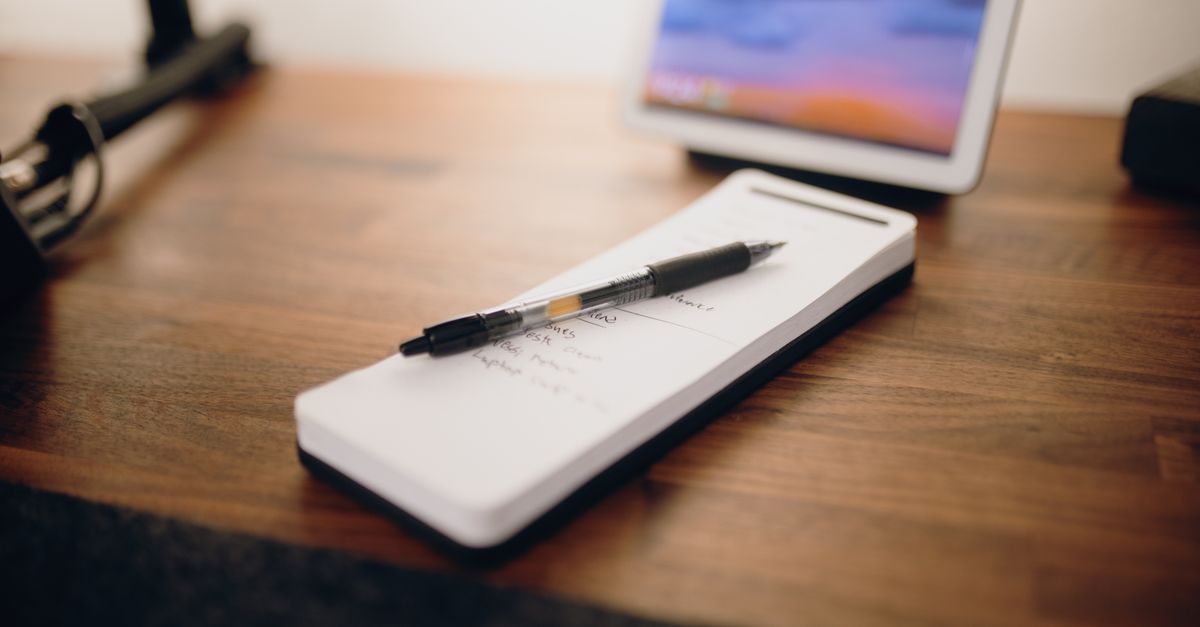
 Photo by Minh Phuc on Pexels
All tasks are not equal (but your list pretends they are)
The deepest flaw in a flat list is that it flattens importance.
On a typical list, "reply to Dave" and "finish the quarterly plan" look identical. Same bullet, same checkbox, same visual weight. But one takes ninety seconds and changes nothing, while the other takes a day and changes everything.
When everything looks equal, you choose by effort, not by impact. And low effort always wins when you are tired, which is most of the time.
The 80/20 idea applies brutally here. Usually one or two items on your list are responsible for most of the value. The other dozen are noise wearing the costume of work. A flat list cannot tell them apart, so it lets you drown the vital few in the trivial many. The Nielsen Norman Group's writing on how attention is a scarce, easily fragmented resource backs this up — spread it across a dozen equal-looking items and none of them gets enough to matter. It is the same reason I eventually decided that doing fewer things, better, was the real lever.
What to do instead: the one-thing list
The fix that changed my work was almost insultingly simple. Before I write any list, I answer one question:
What is the one thing that, if I do it today, makes everything else easier or unnecessary?
That becomes the top of my day. Not the bottom. Not "if I have time." The top. I do it first, before the easy stuff, before email, before the dopamine buffet of small tasks — the same instinct I leaned on when I learned why tackling the hard thing first actually works.
Then, and only then, do I let myself touch the rest of the list. Here is the structure:
- The one thing — the highest-impact task, done first, no exceptions.
- Two supporting tasks — things that move real work forward.
- The shallow pile — emails, admin, small stuff, batched into a single window.
The shallow pile still exists. It just no longer gets to masquerade as the main event.
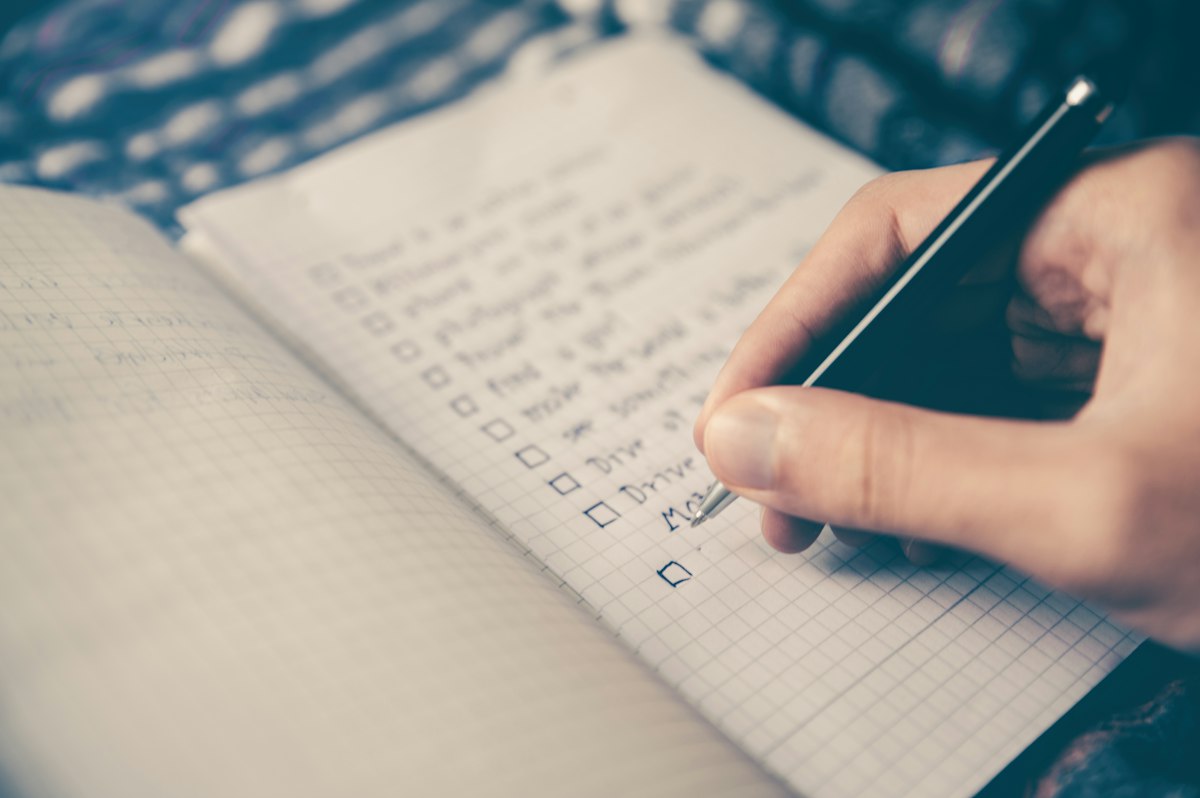
 Photo by Daniil Komov on Pexels
The before-and-after that convinced me
Let me show you the difference in plain terms, because the contrast is stark.
| Flat to-do list | One-thing approach | |
|---|---|---|
| What I optimized for | Number of checkmarks | Impact of the day |
| When I did hard work | Last, if ever | First, always |
| End-of-day feeling | Busy but uneasy | Calm and clear |
| Avoidance | Constant and hidden | Hard to hide from |
| Weeks later | Same goals, no progress | Goals visibly moving |
The flat list let me lie to myself with a clear conscience. The one-thing list made the avoidance visible, because if I had not done the one thing, no number of small checkmarks could disguise it.
Where lists actually do belong
To be fair, lists are not the enemy. They are a fine storage tool. The problem is using them as a prioritization tool.
A list is great for capturing everything so you stop carrying it in your head. Dump it all in. Let automation and reminders handle the brainless recurring stuff so it never even reaches your decision-making.
But the moment you sit down to work, do not let the list decide what matters. You decide. The list holds your options; it should never choose for you. Treat it as a menu, not a manager.
The week I tested this against my old habits
I did not trust the idea at first, so I ran it side by side. One week the old way — flat list, work top to bottom as things felt urgent. The next week the new way — one thing first, every day, no exceptions.
The flat-list week looked great on paper. I checked off forty-one tasks. Forty-one! My old self would have been thrilled. But when I looked at what those forty-one tasks were, the picture changed. Replies. Small edits. Admin. Scheduling. Almost none of them moved any goal I actually cared about. I had been productive in the way a hamster wheel is productive — lots of motion, zero distance.
The one-thing week, I checked off far fewer items. Maybe twenty-five. But four of those twenty-five were the genuinely hard, important things I had been avoiding for weeks. The proposal got written. The difficult conversation happened. The strategy I kept postponing got decided.
 Photo by Ron Lach on Pexels
Twenty-five meaningful tasks beat forty-one trivial ones, and it is not close. The flat list had made me feel busier and accomplished less. The one-thing list made me feel slightly under-occupied and accomplished far more. That gap — between feeling productive and being productive — is the entire game, and a flat list keeps you on the wrong side of it.
How to handle the urgent stuff that ambushes you
The obvious objection is real fires. What about the genuinely urgent thing that lands at 10 AM and cannot wait?
Handle it. Urgency is real and sometimes you have to drop everything. But notice the trick your brain plays: it loves to dress up the merely easy as the urgent, because easy-and-urgent gives you permission to avoid hard-and-important with a clear conscience.
So I apply a simple test to anything claiming to be urgent. Will this matter in a week? Will the world actually break if it waits until my one thing is done? Most "urgent" tasks fail that test instantly — they are urgent in the sense that someone wants a fast reply, not in the sense that delay causes harm. Those can wait an hour. Do your one thing first; the truly urgent fire will still be there, and now you can fight it without sacrificing the work that mattered.
If you want to try this, pick tomorrow's one thing tonight and do it before you open your inbox — and if the idea resonates, it is worth reading more about building a system that survives your worst, most reactive days.
The bottom line
A finished to-do list is not the same as a finished day. I learned that the hard way, staring at fourteen checkmarks and one untouched task that mattered more than all of them combined.
Stop asking how much you did. Start asking whether you did the thing that mattered.
Your list is comfortable. The real work usually is not. So tomorrow, before you write a single bullet, ask the only question that counts: what is the one thing? Do that first. The checkmarks can wait.
Key Takeaways
- Replace task-completion metrics with impact metrics—measure your day by whether the single most critical task got done, not by how many checkboxes you ticked.
- Prioritize the one high-impact task that makes everything else easier or unnecessary, and do it first—before email, meetings, or small tasks—to avoid the 'efficiently busy' trap.
- Flat to-do lists flatten importance; use a tiered structure (one critical task, two supporting tasks, then shallow work) to force focus on what truly moves goals forward.
- Apply the 'will this matter in a week?' test to distinguish real urgency from disguised avoidance—most 'urgent' tasks can wait until your one critical task is complete.
- Batch shallow work (emails, admin) into a single window after your high-impact task is done to prevent it from masquerading as meaningful progress.
- Discomfort is a signal—your one critical task is usually the one you’re avoiding, and tackling it first eliminates dread and makes the rest of the day feel lighter.
Frequently Asked Questions
So should I throw away my to-do list entirely?
No. Keep it as a capture and storage tool so nothing falls through the cracks. Just stop using it to decide your day. Pick your one high-impact task first, then let the list hold the rest.
What if my job is genuinely all small tasks?
Then your "one thing" might be improving the system itself — automating a recurring chore, or fixing the process that generates all those small tasks. The high-impact move is often the work that reduces future work.
How do I figure out the one thing each day?
Ask which task, if finished, would make the others easier or irrelevant. It is usually the one you least want to do. Discomfort is a surprisingly reliable signal of importance.
Doesn't doing the hard thing first ruin my morning?
It feels that way for about a week. Then you discover that finishing the hard thing early makes the entire rest of the day feel light, because the dread is gone. The relief is worth more than the comfort you gave up.





Comments
Sign in to join the conversation
No comments yet. Be the first to share your thoughts!