

Why Doing Less Is the Real Productivity Hack
Why Doing Less Is the Real Productivity Hack
I cut my daily to-do list in half and finished more than when it was full.
I know how that sounds. For years I believed the opposite — that productivity was a volume game, that the path to more output was simply more tasks, more hours, more hustle. So I packed my days until they bulged, and I drowned in them, finishing a fraction of what I planned and feeling guilty about the rest.
Then I tried doing less. Not as a wellness slogan, but as an experiment. The results embarrassed me. Here is what happened and why it works.
Quick Answer
Doing less is the real productivity hack because a shorter list forces prioritization, and prioritization is where almost all of productivity's value actually lives. When you try to do everything, you spread your finite focus thin across many tasks and do all of them poorly. When you deliberately do less, you pour that same focus into the few things that matter most — and finish them faster and better. Cutting my list in half roughly doubled what I actually completed, because I stopped wasting energy on work that never deserved it.
The "more is better" lie I believed
I want to name the belief directly, because most of us carry it without noticing.
We treat productivity as quantity. A productive person, in this view, does more things. So we cram our days, take on every request, and measure our worth by the length of our list. A long list feels ambitious. It feels like proof we are trying.
It is a lie, and an expensive one. A long list does not mean more gets done. It means your attention gets divided into smaller and smaller slivers, until no single task gets the focus it needs to be done well — or done at all.
You do not have an unlimited amount of focus. Treating your list as if you do is how you guarantee you finish nothing.
The overstuffed list also generates a constant, low hum of stress. You are always behind, because you designed a day that cannot be completed. That stress eats into the very focus you needed to do the work. The list does not just overcommit your time; it poisons your attention.
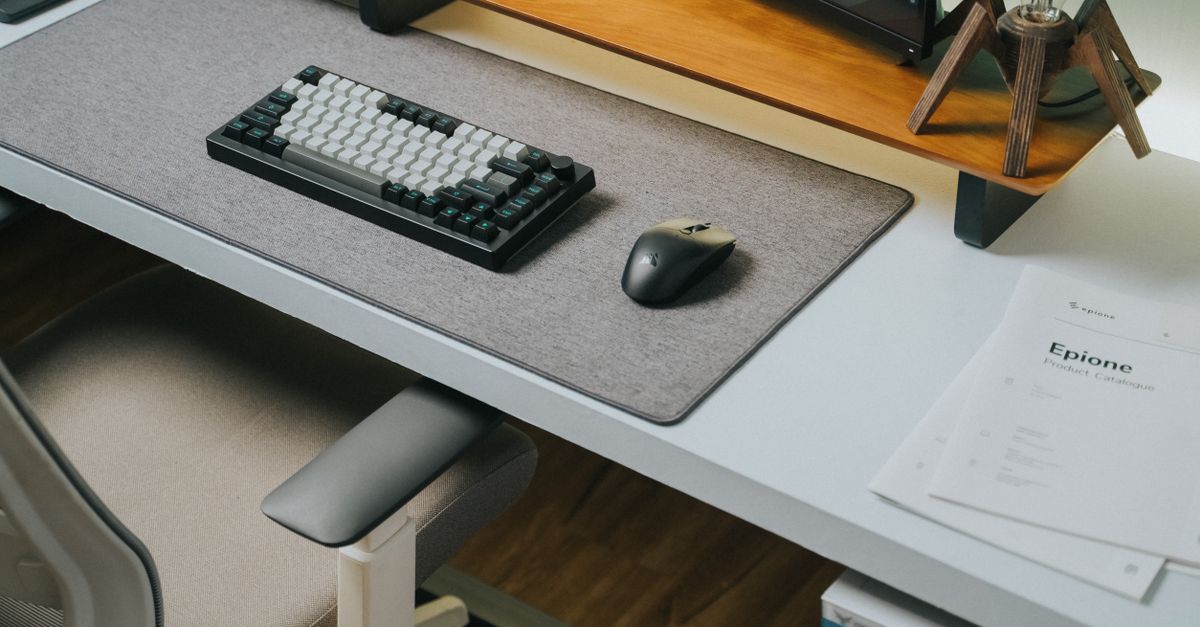
 Photo by picjumbo.com on Pexels
The math of focus
Here is the idea that turned my thinking around. It is uncomfortable but true.
Most of the value you produce comes from a small fraction of your tasks. A couple of things on any given list are responsible for the bulk of the real impact. The rest is filler — necessary sometimes, but rarely where the value is.
So when you do more, you are usually just adding more low-value tasks. They do not increase your output meaningfully; they just dilute your focus and steal time from the high-value few. Every extra trivial task you accept is borrowed from the important work, whether you feel the theft or not.
Doing less flips this. By cutting the list down, you are not cutting your output — you are cutting the filler. The vital few remain, and now they get your full, undivided attention. That is why fewer tasks can produce more results. You did not lose the work that mattered. You lost the noise that was burying it. This is the same reason a long to-do list quietly keeps you behind — it flattens the vital few into the trivial many.
How I actually cut my list in half
This was not vague. Here is the exact process I used, and still use.
- Write the full list first. Get everything out of your head and onto the page. You cannot cut what you cannot see.
- Find the vital few. Ask which one or two tasks would make the biggest difference if completed. Mark them. These are non-negotiable.
- Be ruthless with the rest. For every remaining task, ask three questions: Does this truly need doing? Does it need doing by me? Does it need doing today? Most fail at least one.
- Delete, delegate, or automate. Anything that fails — drop it, hand it off, or let automation handle it. Repetitive, rule-based tasks especially should go to a system or an AI assistant, not your day.
- Keep what survives. What remains is a short, honest list of work that actually matters. Do that, fully.
The first time I ran this, my fifteen-item list became six. I braced for disaster. Instead, I finished all six, did them well, and ended the day calm. The nine I cut? Most of them genuinely did not matter, and the few that did resurfaced later with no harm done.
 Photo by www.kaboompics.com on Pexels
The before and after
The change was visible within a week. Here is the honest comparison:
| Full list | Half list | |
|---|---|---|
| Tasks planned | Many | Few |
| Tasks actually finished | A fraction | Nearly all |
| Quality of the work | Rushed | Considered |
| Daily stress | High, always behind | Low, in control |
| Real impact produced | Diluted | Concentrated |
Notice the most counterintuitive row: I planned fewer tasks but finished more of them, and the work was better. Less in, more out. That is not magic. It is what happens when you stop splitting your focus into uselessly thin slices.
Doing less is harder than it sounds
I will be honest about the catch. Doing less is not easy — it is emotionally harder than doing more.
Doing more is passive. You just say yes to everything and let your day fill up. It requires no decisions and no courage. Doing less is active. You have to choose, and choosing means saying no, dropping things, and tolerating the guilt of unfinished filler.
That guilt is the real obstacle. We are trained to feel that a full list is virtuous and a short one is lazy. It is exactly backwards. A short, deliberate list is the disciplined choice. A long, automatic one is the easy, unexamined one. Harvard Business Review has written about how overload erodes the very judgment you need to choose well, which is why the bloated list quietly defeats itself.
The skill underneath all of this is prioritization — the willingness to decide what matters and let the rest go. Master that, and "doing less" stops feeling like falling behind and starts feeling like finally getting ahead.
The two kinds of "no" that made it possible
Doing less is impossible without saying no, and I had to learn two distinct flavors of it. They feel different and they fail differently.
The first is the external no — declining the requests, meetings, and favors other people pile onto your plate. This one is uncomfortable because it risks disappointing someone. But it is also the more obvious one, and most advice about doing less stops here. Say no to others. Fine.
The second is harder and almost nobody talks about it: the internal no. This is saying no to your own ideas, your own ambitions, your own list of things you genuinely want to do. Your overstuffed list is not all other people's demands. A lot of it is you, wanting to do everything, refusing to choose. The internal no means accepting that even good, worthy tasks have to be cut, because you cannot do all of them well.
 Photo by Julio Lopez on Pexels
The internal no was the one that unlocked everything for me. I could trim other people's requests all day, but until I admitted that my own ambitions had to be prioritized — that I had to let some good things go undone to do the best things well — my list stayed bloated. Doing less is not mainly about other people. It is about being honest with yourself about your own limits.
What I do with the time I save
Here is a question worth sitting with: if doing less frees up time, what is that time for? Get this wrong and "doing less" just becomes "doing different busywork."
I split the reclaimed time three ways, on purpose. A portion goes to depth — giving my few priorities the kind of focused, unhurried attention that produces genuinely good work rather than rushed-out work. A portion goes to rest, deliberately, because a rested brain does the high-value work better and a depleted one does everything worse. And a portion goes to slack — unscheduled space that absorbs the unexpected so a single surprise does not detonate my whole week.
That slack turned out to be secretly vital. When my days were packed, I had no capacity to handle anything new, so every surprise became a crisis. Doing less built in the breathing room to handle life's curveballs calmly. Less on the list did not just mean better work. It meant a steadier, less frantic way of moving through the days — the same breathing room I try to defend when protecting a couple of hours of deep work a day.
If your list has quietly bloated, try cutting it in half tomorrow and giving what remains your full attention — and it is worth reading more on building a setup that keeps you doing less, better, even under stress.
The bottom line
I spent years believing the answer was always more. More tasks, more hours, more hustle. The answer was less — less filler, less dilution, less drowning — so that the few things that mattered could finally get all of me.
Productivity is not about doing more things. It is about doing fewer things, better.
Tomorrow, write your full list, then cross out everything that does not truly matter. Do what remains, completely. Notice how much more you finish when you finally stop trying to do it all. What would you cross off first?
Key Takeaways
- Cut your daily to-do list in half to force prioritization and increase productivity by focusing on high-value tasks
- Ask three questions for each task: Does it truly need doing? Does it need doing by me? Does it need doing today? to eliminate non-essential tasks
- Allocate reclaimed time to depth, rest, and slack to produce better work, avoid burnout, and handle unexpected tasks
- Prioritize tasks based on their potential impact, and eliminate low-value tasks that dilute focus and steal time from important work
- Use the 'internal no' to say no to your own non-essential tasks and ambitions, and accept that you cannot do everything well
Frequently Asked Questions
Won't doing less mean things fall through the cracks?
Some things will, and most of them should. The tasks you cut are, by design, the low-value ones. The genuinely important work gets your full focus and gets done. A few dropped trivialities are a tiny price for finishing what matters.
My job demands a lot of small tasks. How can I do less?
Batch them and automate what you can — many small tasks are repetitive and do not need you at all. The goal is not to ignore them but to stop letting them crowd out your high-value work. Contain the small stuff; do not let it run your day.
How do I decide what to cut?
Ask whether a task truly needs doing, by you, today. Most tasks fail at least one of those. What survives all three is your real list — and it is almost always shorter than you expect.
Doesn't a short list make me look unambitious?
Ambition is measured by what you finish, not what you list. A person who completes three important things beats one who lists fifteen and finishes four. Results are the only scoreboard that matters.







Comments
Sign in to join the conversation
No comments yet. Be the first to share your thoughts!