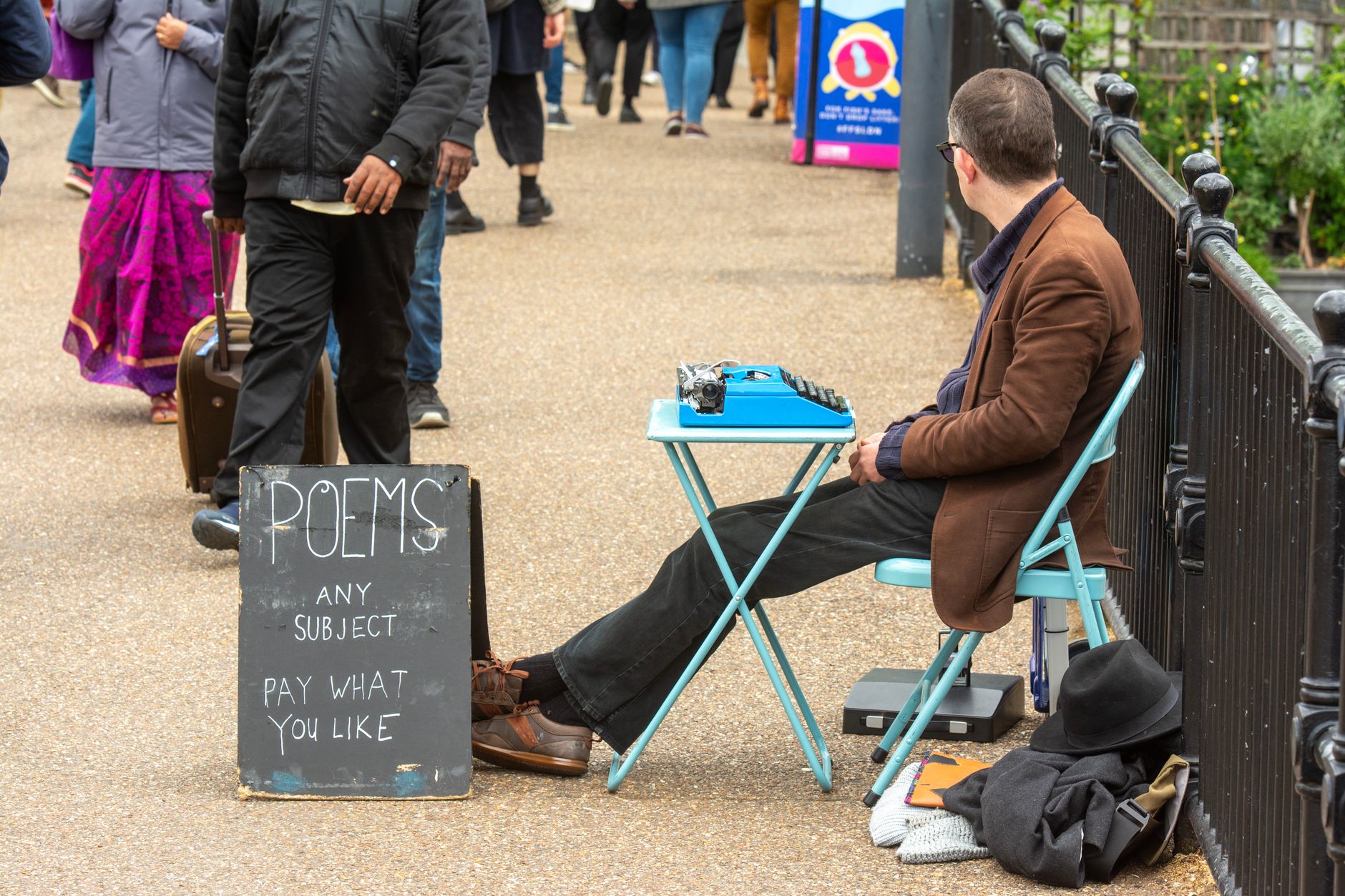
Use AI to study forms, generate alternate word choices, and critique meter — but write the emotional core yourself. AI is a thesaurus with context, not a poet.
Not "I want to write about love." Try: "My grandmother's hands the day she stopped recognizing me." Specific > abstract.
Pen and paper, no AI. Dump every image, sound, memory around the seed. Don't edit. This becomes your raw material.
Prompt: "Explain the villanelle form with one classic example and its rules (meter, rhyme scheme, repetition pattern)." Decide if your material fits a constraint or wants free verse.
Write 4-8 lines yourself. Then prompt: "Here's my draft [paste]. Suggest 5 alternative last lines that keep the meter but sharpen the image." Pick one, modify, continue.
Prompt: "Scan my poem for metrical feet. Flag any lines that break the pattern." AI catches stumbles your ear missed.
Prompt: "List every cliché or overused image in my poem. Suggest fresher alternatives." Kill "heart aches" and "raging storm."
Once for meaning, once for sound, once for breath. Rewrite what stumbles.
If submitting: Duotrope or Submittable for journals. Do NOT submit AI-generated content — most journals (Poetry, The Atlantic, Rattle) require disclosure and reject pure AI work.
| Tool | Use Case | Free Tier | Best For |
|---|---|---|---|
| Assisters | Collaboration | Yes | Alternatives + critique |
| Poetry Foundation | Reading masters | Yes | Form study |
| RhymeZone | Rhyme search | Yes | Sound patterns |
| Duotrope | Submissions | Trial | Journal tracking |
| Scrivener | Poem collections | Trial | Organization |
Poetry is the most human of forms. AI can help you sharpen a line, find a rhyme, scan a meter — but it can't feel your grandmother's hand. Use it as a tool, not a ghost.
Try Assisters free →
The best AI tools for writing investor updates in 2026 include those that assist with content generation, data analysis, and personalization…

Comprehensive comparison of every major AI writing tool in 2026 — ChatGPT, Claude, Gemini, Jasper, Copy.ai, Grammarly AI — with use cases, p…

Jasper AI vs Copy.ai vs Writesonic — 2026 comparison for template quality, brand voice, SEO integration, team features, and price. Which AI…







Comments
Sign in to join the conversation
No comments yet. Be the first to share your thoughts!