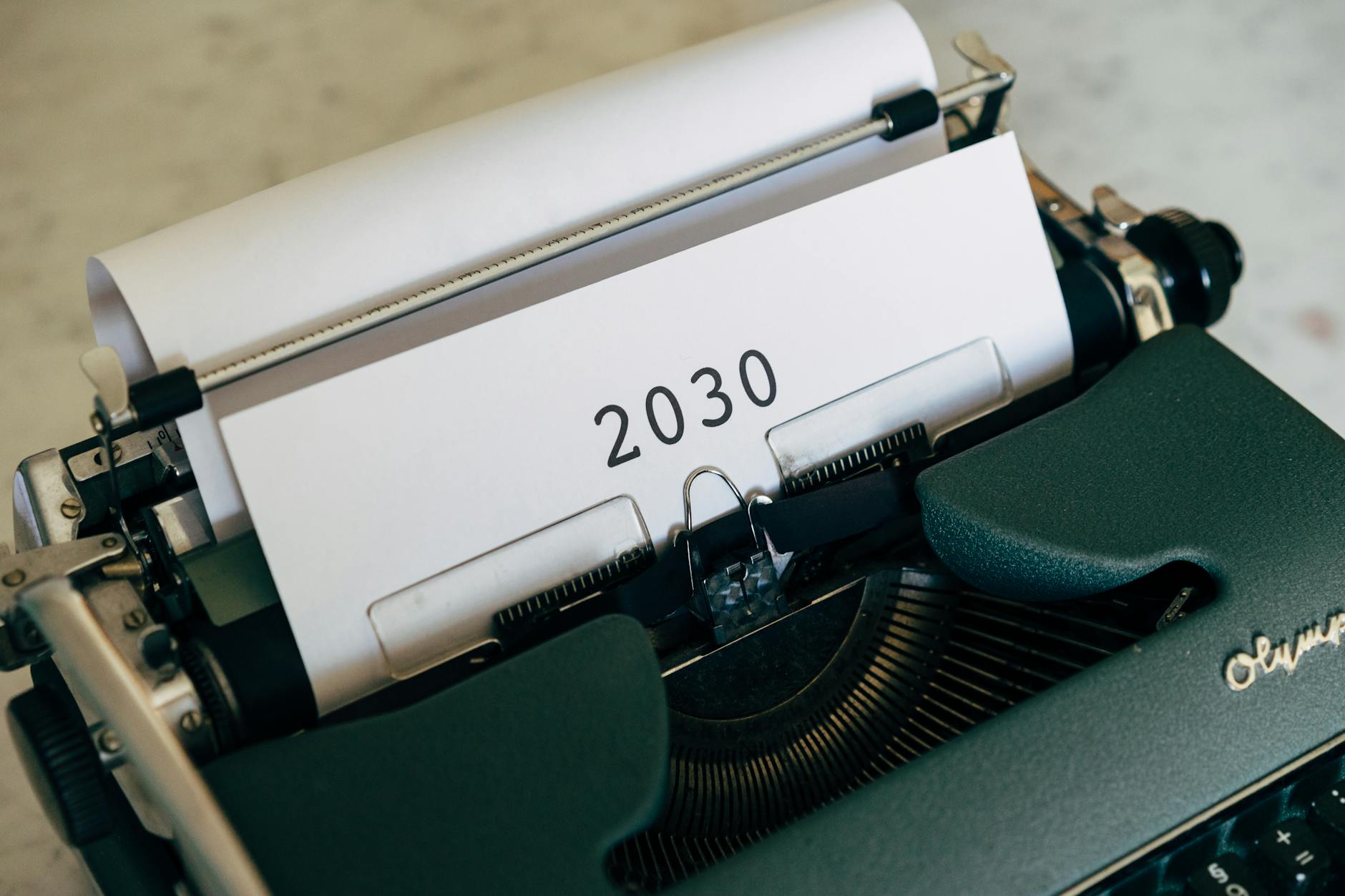
The next 18 months in AI will be defined by three shifts:
These shifts will separate AI tool builders who anticipated the transition from those who optimized for today's paradigm.
In 2026, "agents" are mostly demos and early products. By mid-2027, autonomous AI agents will execute multi-step workflows without human checkpoints for routine business processes.
What this looks like in practice:
Enablers already in place: OpenAI's Operator, Anthropic's Computer Use, Google's Project Astra all demonstrate the technical capability in 2026. The gap to close is reliability (agents currently fail ~30% on complex tasks) and trust (users accepting autonomous action).
Impact: Job function transformation more than job elimination. Professionals who understand how to direct and verify agent work will command premium salaries.
By 2027, the text-only AI interface will feel as dated as a command-line terminal. Every major AI interaction will be naturally multimodal:
Products to watch: Google Gemini Live (voice-first), Apple Intelligence (on-device multimodal), Meta AI (spatial computing via Ray-Ban glasses).
The business implication: content strategy must extend beyond text and images into voice, video, and interactive experiences. AI tools built exclusively for text will compete in a shrinking market.
AI capabilities that currently exist only in labs will reach consumer and small business markets by 2027:
| Application | Example Companies | Description |
|---|---|---|
| Physical AI in warehouses | Figure, 1X Technologies | Fully autonomous picking robots using vision models |
| AI in kitchens and restaurants | N/A | Automated food prep and inventory management |
| AI in construction | N/A | Computer vision for site safety monitoring and progress tracking |
| Consumer robotics | Unitree, Boston Dynamics consumer line | First generation of affordable home robots |
This is not about replacing service workers wholesale — it's about augmenting dangerous, repetitive, and precision-dependent tasks first.
EU AI Act (fully enforced by August 2026):
USA: Executive orders and sectoral regulation (FDA for medical AI, SEC for financial AI, EEOC guidance for hiring AI). Federal comprehensive AI legislation likely by 2027.
India's M.A.N.A.V. framework: Sets accountability and explainability standards for AI deployed in India. Government procurement of AI increasingly requires M.A.N.A.V. compliance documentation.
Business impact: AI tool builders must invest in compliance infrastructure. "Explainability" becomes a feature, not an afterthought. Companies without compliance capabilities will lose enterprise contracts.
The gap between open-source models (Llama, Mistral, Falcon) and proprietary leaders (GPT-4o, Claude Opus) will narrow substantially by 2027.
| Model Type | Key Drivers | Implications for Builders |
|---|---|---|
| Open-source | Meta's Llama 4 series, Mistral AI, xAI, community fine-tuning | Run inference locally or self-host → eliminate per-token API costs; Fine-tune on proprietary data without sharing with third-party model providers; Build competitive AI products with $0 model licensing |
| Proprietary | Premium capabilities (reasoning, coding, multimodal) | Premium will come from frontier capabilities, not general text generation. The commodity tier of the market will be open-source. |
The university model built around information scarcity (professors as gatekeepers of knowledge) breaks down when AI provides instant, personalized tutoring on any subject at any level.
What's emerging by 2027:
Opportunity for entrepreneurs: Credentialing platforms, skills assessment tools, and AI-native learning experiences have better economics than traditional EdTech.
AI diagnostic tools are already surpassing specialist accuracy in radiology (chest X-rays, retinal scans, skin cancer) and pathology (cancer cell identification). By 2027:
| Application | Impact | Ethical Tension |
|---|---|---|
| AI-first triage in emergency rooms | Standard in leading hospitals | Accountability for AI diagnostic errors |
| Drug discovery | Timelines compress from 12 years to 4–6 years (AI protein folding + molecular simulation) | Regulatory, insurance models, and medical training need updating |
| Mental health AI companions | Extend access to underserved populations (supervised by human therapists) | Who is liable when an AI misses a diagnosis? |
| Personalized medicine | AI analyzes genome + history → recommends optimal treatment protocols | N/A |
By 2027, an estimated 40–60% of content on the internet will have AI involvement in its creation (Gartner forecast). This creates an existential challenge for trust:
| Trust Infrastructure | Description |
|---|---|
| Deepfake detection | Standard feature of social media platforms |
| Content provenance standards (C2PA) | AI-generated content cryptographically watermarked |
| Publisher AI disclosure requirements | Mandated by regulators in EU, UK, and likely US |
| Search engine signals | Shift toward verified human expertise (E-E-A-T gains weight) |
For content creators: publishing authentic, verifiable human expertise will become a competitive advantage as AI-generated noise saturates every topic.
AI personalization in 2026 feels remarkable. By 2027, it will feel intrusive to users who haven't consented to it:
| Personalization Aspect | 2027 Scenario | Backlash |
|---|---|---|
| Pricing | Personalized in real time based on inferred income (AI reads browser history) | GDPR enforcement actions accelerate |
| News feeds | So personalized they create total information isolation | "Personalization opt-down" becomes a user right in major markets |
| Mental health AI | Notices behavioral patterns before you do | Products built on hyper-surveillance personalization face regulatory risk |
The opportunity: "Privacy-respecting personalization" — AI that delivers value using only in-session context and explicit user preferences, not behavioral surveillance — becomes a differentiated product positioning.
By the end of 2027, asking "do you use AI?" will feel as dated as asking "do you use the internet?" AI will be infrastructure — embedded invisibly in every tool, process, and product.
| Differentiator | Description |
|---|---|
| Taste | AI can generate, but it takes human judgment to know what's worth generating |
| Relationships | AI cannot replace trust built over time with real humans |
| Speed of learning | How fast your organization integrates new AI capabilities |
| Ethical clarity | Organizations with principled AI policies attract talent and customers who care |
| Domain depth | AI amplifies expertise; shallow expertise becomes worthless |
The winners in 2027 are not the companies using the most AI — they're the organizations where AI amplifies genuine human excellence rather than replacing the need for it.
If you're a professional or entrepreneur:
If you're building a product:
A: No. The more accurate prediction: most jobs change, some roles disappear, new roles emerge. The World Economic Forum forecasts that AI will eliminate 85 million jobs but create 97 million new ones by 2027 (many requiring AI collaboration skills).
A: OpenAI, Anthropic, Google DeepMind, and Meta AI all have structural advantages. The more interesting question is which application-layer companies (built on top of these models) will build durable businesses — that depends on defensible distribution and customer relationships, not model quality.
A: Yes, with specificity. "I know how to use ChatGPT" is table stakes. "I built and manage our company's AI agent stack" or "I specialize in AI-augmented [specific domain]" has meaningful market value.
The next 18 months will compress more change into the AI landscape than the previous five years combined. Agentic AI, multimodal interfaces, and regulation will each individually be transformative. Together, they represent a phase transition.
The right response isn't anxiety about what AI will do to your industry — it's clarity about what human capabilities become more valuable when AI handles everything else.
Build those capabilities. Document your journey. Share what you learn.
Write your AI insights and predictions on Misar Blog — the platform where forward-thinking ideas find their audience. Start writing →
The AI Assistant Creator Economy Explained

By 2026, AI chatbots won’t just be tools—they’ll be revenue streams. If you’re a creator, coach, consultant, or small business owner, an AI…
The future of customer service isn’t being built in call centers alone—it’s being embedded directly into the products and workflows your Saa…





Comments
Sign in to join the conversation
No comments yet. Be the first to share your thoughts!