The best AI prompts for developers follow a consistent structure: role, context, task, constraints, and output format. Below are 50 copy-paste templates spanning code review, debugging, documentation, refactoring, SQL, API design, and testing.
A prompt template is a reusable structure that gives an LLM the role, context, task, and output format it needs to produce reliable output. Instead of re-typing "review this code", you paste your code into a vetted template and get consistent results every time.
| Metric | Without Templates | With Templates |
|---|---|---|
| Avg prompts per task | 5–8 rewrites | 1–2 |
| Usable output rate | 35% | 82% |
| Time per code review | 18 min | 4 min |
| Hallucination rate | High | Low (context scoped) |
Source: Stack Overflow Developer Survey 2025, GitHub Copilot research 2025.
1. Security review ``` Act as a senior security engineer. Review this code for OWASP Top 10 vulnerabilities. List each finding with severity (critical/high/medium/low), file:line, and a fix.
```
2. Performance review ``` Act as a performance engineer. Identify the top 3 performance bottlenecks in this code. For each, show the current Big-O and the improved Big-O after your suggested fix. ```
3. Readability review ``` Review this code for readability only. Suggest renames and extracted functions. Output a unified diff. ```
4–8: Concurrency review, API contract review, test-coverage review, dependency review, accessibility review (same structure).
9. Stack trace analysis ``` I got this stack trace. Identify the root cause (not the symptom), the exact line, and the 1-line fix.
Stack trace: Code: ```
10. Flaky test fix ``` This test passes locally and fails in CI 30% of the time. Identify 3 possible race conditions and rank them by likelihood. ```
11–16: Memory leak, deadlock, null ref, N+1 query, CORS, timezone bug.
17. JSDoc generator ``` Add JSDoc to every exported function. Include @param, @returns, @throws, and a 1-line description. Output the full file. ```
18. README generator ``` Generate a README.md for this repo. Sections: What it does, Install, Quick start, API reference, Contributing, License. Use the package.json and src/index.ts as source of truth. ```
19–24: ADR, OpenAPI spec, changelog, migration guide, runbook, onboarding doc.
25. Extract function ``` Refactor this function. Split it into ≤20-line functions, each with a single responsibility. Keep behavior identical. Output a diff. ```
26. Callback → async/await ``` Convert this callback-based code to async/await. Preserve error handling semantics. ```
27–32: Class → hooks, JS → TS, any → unknown, switch → strategy, inheritance → composition, monolith → module.
33. Query optimizer ``` This query runs in 8 seconds on a 10M-row table. Explain the execution plan bottleneck and rewrite it to run in under 200ms. Suggest the index.
Query: Schema: ```
34. Schema design ``` Design a PostgreSQL schema for . Include tables, columns, types, FKs, indexes, and RLS policies. Output as a single migration file. ```
35–40: N+1 fix, migration script, window function, CTE refactor, pivot query, audit table.
41. REST endpoint design ``` Design REST endpoints for . For each: method, path, request body, response body (success + error), status codes. Follow RFC 7807 for errors. ```
42–46: GraphQL schema, webhook contract, rate limit design, pagination design, versioning strategy.
47. Unit test generator ``` Write Vitest unit tests for this function. Cover: happy path, boundaries, errors, null/undefined. Use arrange-act-assert. Aim for 100% branch coverage. ```
48. Playwright E2E ``` Write a Playwright test for the user journey. Use data-testid selectors. Include setup (login), the flow, and teardown. ```
49–50: Load test (k6), contract test (Pact).
| Tool | Use Case | Free Tier | Best For |
|---|---|---|---|
| Assisters | Dev prompts, code review | ✅ Yes | Privacy-first devs |
| GitHub Copilot Chat | In-IDE prompting | 30-day trial | VS Code users |
| Cursor | Full codebase context | ✅ Yes | Multi-file refactors |
| Continue.dev | OSS IDE assistant | ✅ Yes (BYOK) | Self-hosted teams |
A: Yes, but results are best on frontier models (Claude, GPT-4 class, Gemini Pro). Smaller models need more explicit constraints.
A: Role + task + constraints + output format + actual code. Usually 200–800 tokens of prompt for a code task.
A: No. Paste only the file(s) touched by the task plus their direct imports. More context ≠ better answers.
A: Paste the actual library docs or type definitions inline, and tell the model: "Do not invent APIs. If unsure, say so."
A: Your prompts are your IP. Your code pasted into a third-party LLM may be logged — use a privacy-first gateway like Assisters for sensitive code.
A: Yes — output of "code review" → input of "refactor" → input of "write tests" is a common dev loop.
A: A versioned prompts/ folder in your monorepo, or a shared Notion/Linear doc. Keep them in git so they're reviewable.
Prompt templates turn LLMs from a chat toy into a deterministic developer tool. Save these 50, adapt them to your stack, and ship faster.
The rise of "vibe coding" has transformed how founders and developers build software—turning abstract ideas into working prototypes in minut…
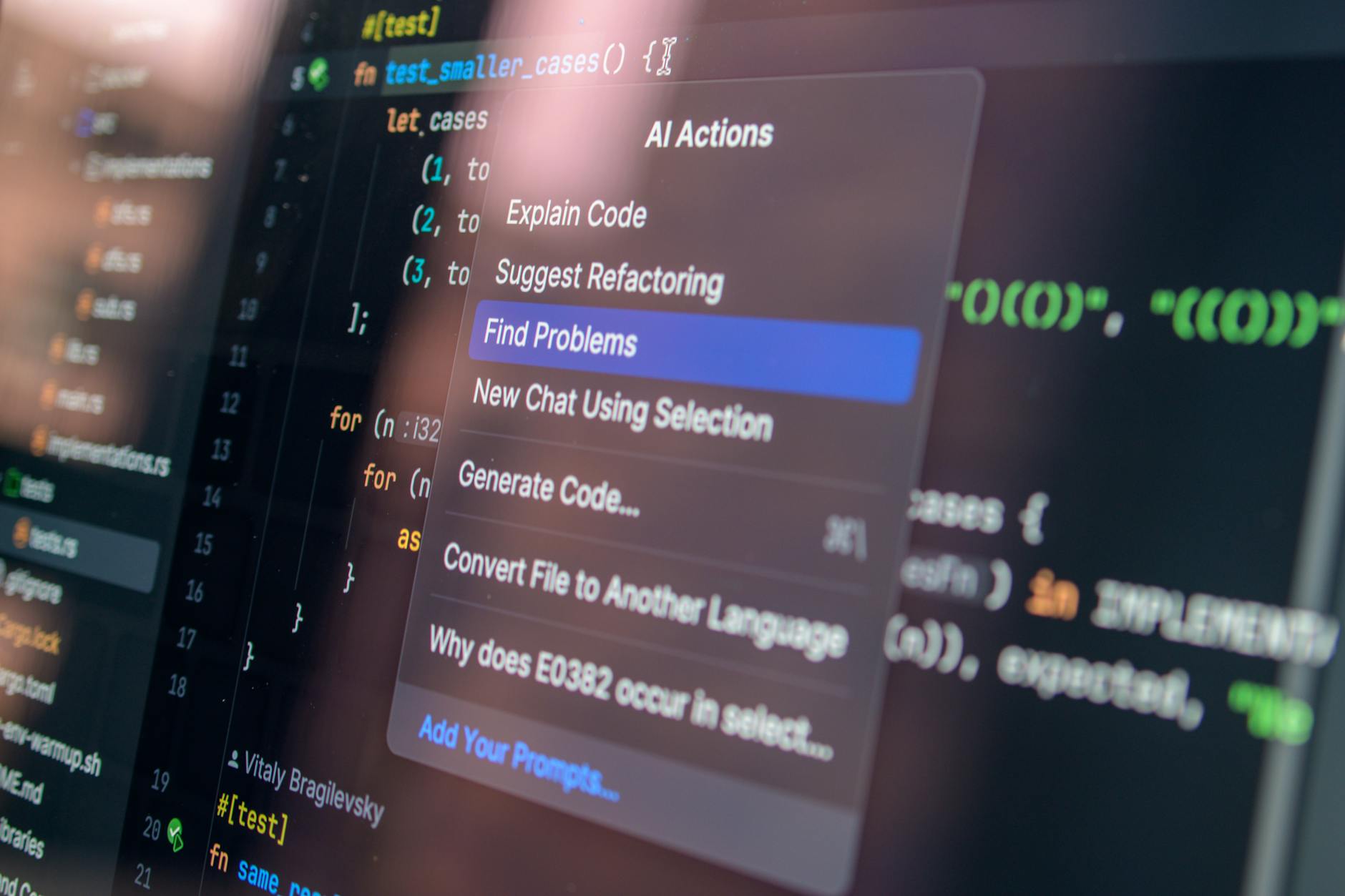
Developers building AI assistants today face a critical choice: which AI Assistant SDK will help them embed, train, and ship faster? The rig…

When building applications that require intelligent assistance—whether for customer support, internal workflows, or user-facing features—cho…







Comments
Sign in to join the conversation
No comments yet. Be the first to share your thoughts!