

I Tried the Pomodoro Method for a Month

I Tried the Pomodoro Method for a Month
I used to think the Pomodoro Method was a gimmick for people who couldn't sit still. A tomato-shaped timer ticking on your desk? That felt like productivity cosplay.
Then I had a week where I sat at my laptop for nine hours and produced almost nothing. Nine hours. I opened the same document forty times and closed it forty times.
So I gave the tomato a shot. Thirty days, strict rules, an honest log. Here's everything that happened, including the parts nobody warns you about.
Quick Answer
The Pomodoro Method is 25 minutes of single-task focus followed by a 5-minute break, repeated, with a longer break every four rounds. After a month, my focused output roughly doubled and my evenings stopped feeling like a hangover. The timer didn't make me smarter. It made me stop negotiating with myself about when to start.
The rule I kept breaking on day one
The whole system rests on one boring instruction: when the timer runs, you do one thing. Not one thing plus a quick Slack check. One thing.
I failed this constantly at first. My hand would drift to my phone like it had its own opinions. I'd "just look something up" and resurface eleven minutes later watching a video about deep-sea fish.
What fixed it wasn't willpower. It was friction. I put my phone in another room and kept a scrap of paper next to my keyboard. Every time my brain coughed up a distraction — reply to that email, check the score, did I lock the car — I wrote it down instead of acting on it. The note said: not now, later, I see you.
That tiny ritual was the real unlock. The urge to check things didn't disappear. It just got a parking spot.
 Photo by Nikhil Soni on Pexels
Week one was humiliating, and that was the point
Here's the part the highlight-reel posts skip. The first week, I learned how little actual focused work I'd been doing.
I'd always told myself I worked eight-hour days. The timer told the truth. On my best day in week one I logged eleven Pomodoros — about four and a half hours of genuine concentration. The rest had been a fog of half-attention I'd been generously calling "work."
That number stung. But it was the most useful thing the method gave me, because you can't fix a problem you've been hiding from yourself.
You don't have a time problem. You have an attention-honesty problem. The timer just turns the lights on.
What I actually tracked
I'm allergic to vague advice, so I kept a simple log. Date, number of completed Pomodoros, and a one-line note on what derailed me. Nothing fancy — a plain note on my phone, opened only between rounds.
Here's roughly how the four weeks shook out:
| Week | Avg focused blocks/day | Felt like |
|---|---|---|
| 1 | 9 | Exposing, frustrating |
| 2 | 12 | Mechanical but steady |
| 3 | 14 | Quietly addictive |
| 4 | 13 | Normal — just how I work now |
The dip in week four wasn't a failure. It was the method maturing into a habit I no longer had to think about. By then I wasn't counting tomatoes to prove anything. I was counting because it kept me honest.
The breaks matter more than the focus
This is the counter-intuitive bit. I expected the value to live in the 25 minutes of work. It actually lives in the 5 minutes of break.
A real break means standing up. Looking at something far away. Refilling water. It does not mean scrolling, because scrolling isn't rest — it's just a different tab open in your brain. The first week I "rested" by checking my phone and came back more scattered than before.
When I started taking real breaks — eyes off all screens, body actually moving — the next focus block landed cleaner. The rhythm started to feel less like discipline and more like breathing. Tension, release. Tension, release. The American Psychological Association's research on attention and rest makes the same point: recovery isn't the opposite of focus, it's what makes the next stretch of focus possible. This is also a small piece of the productivity approach that finally outlasted my burnout — work hard in bursts, recover on purpose.
I also stopped skipping the long break. Every fourth round, fifteen to twenty minutes, no apology. That's when I'd notice the thing I'd been stuck on suddenly had an obvious answer.
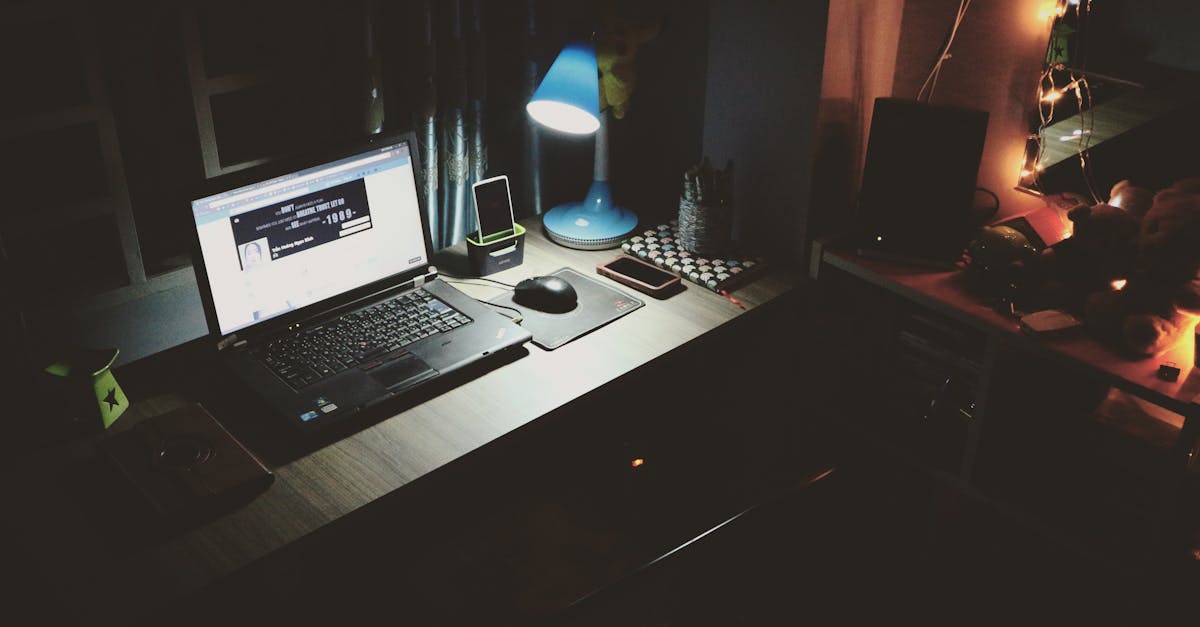 Photo by Bich Tran on Pexels
Where the method falls apart
I'm not going to pretend it's magic. It breaks in real ways.
The 25-minute block is brutal for deep creative work that needs a long runway. Some tasks — writing a tricky section, untangling a gnarly bug — only get good around minute forty. For those I bent the rule to 50/10 blocks and stopped feeling guilty about it. The timer is a tool, not a religion.
It's also useless against meetings. You can't Pomodoro a calendar that someone else owns. On heavily-scheduled days I just accepted I'd get two or three blocks total and aimed those at the one thing that mattered.
And honestly, some days you're sick or sad or your brain is soup, and a timer ticking at you feels like a tiny tyrant. On those days I quit and did literally anything else. Forcing it would've taught my brain to hate the system.
How I'd run it if you're starting tomorrow
If you want to try this without the messy month I had, here's the shortest version that works:
- Pick one task before you start the timer. Decide first, focus second. Never the reverse.
- Phone in another room. Not face down. Another room.
- Keep a distraction parking lot — a scrap of paper for every "ooh, I should" thought.
- Take the break for real. Stand, move, look far away. No screens.
- Log the count. One number a day. It's the honesty mirror.
- Bend the timing once it's a habit. 25/5 is training wheels, not a law.
You'll notice the appeal of small automations here too — letting a simple timer or an AI assistant handle the start-stop ceremony so you only have to handle the focus. The less your brain spends deciding when, the more it has left for the actual work.
What the timer taught me about energy, not time
The thing I didn't expect to learn was about my energy, not my hours.
After a few weeks of logging, a pattern jumped out. My morning blocks were dense and sharp. By mid-afternoon the same 25 minutes produced about half as much, and by 5pm I was basically pretending. The timer made this visible because every block was the same length — so the only variable left was me.
So I rearranged the work to match the energy. Hard, creative, brain-heavy tasks went into the morning blocks. Email, admin, light editing, the stuff that runs on autopilot went into the sluggish afternoon ones. Same number of hours, completely different output, just because I stopped asking my 5pm brain to do my 9am brain's job. It's the same instinct behind carving out two protected hours of deep work a day — aim your best attention at the work that deserves it.
If the timer becomes a habit you want to keep, it's worth folding into a wider routine rather than running it in isolation. Try one honest week of counting blocks before you decide whether the tomato stays.
That reshuffle was worth more than the focus boost itself. Most of us schedule by what's urgent, not by what our brain can actually handle at that hour. The Pomodoro log turned my energy into data, and data is something you can plan around. You can't out-discipline a tired brain — but you can stop handing it the wrong work.
The other quiet lesson: I needed fewer blocks than I thought to have a genuinely good day. Eight or nine deep ones, aimed at the right things, beat fourteen scattered across whatever shouted loudest. Quality of aim mattered far more than quantity of tomatoes.
The bottom line
The Pomodoro Method didn't give me superhuman focus. It gave me something better: an honest account of where my hours actually go, and a tiny ritual that gets me started before my excuses wake up.
That's the whole trick. Most of us aren't lazy. We're just stuck in the gap between deciding to start and actually starting, and a ticking timer is a surprisingly effective bridge across it.
So here's my question for you: if you tracked your real focused hours for one honest week, what number do you think you'd be brave enough to look at?
Key Takeaways
- The Pomodoro Method’s real power is creating friction against distractions—put your phone in another room and use a 'distraction parking lot' (a scrap of paper) to log urges instead of acting on them, turning impulsive checks into deferred actions.
- Track completed Pomodoros daily (not hours) to expose your actual focused work time; the first week’s low count reveals how much of your 'workday' is spent in scattered attention, not productive output.
- Real breaks (standing, moving, no screens) are critical—scrolling during breaks resets your brain less effectively than physical movement and distance, making the next focus block sharper.
- Match task difficulty to your energy rhythm: schedule deep work for peak morning blocks and reserve low-energy afternoons for admin/email, as forcing 5pm brain to do 9am work wastes time.
- Bend the 25-minute rule for creative work—longer blocks (e.g., 50/10) often yield better results for tasks requiring extended flow, while shorter blocks excel for admin or quick tasks.
- Aim for quality over quantity: 8–9 well-targeted Pomodoros on high-priority work outperform 14 scattered across urgent-but-shallow tasks, as focus is about precision, not volume.
Frequently Asked Questions
Does the exact 25 minutes matter?
No. It's a sensible default, not a sacred number. The magic is one task, one timer, real breaks. Tune the length to your work.
What if I get interrupted mid-Pomodoro?
If it's quick, note it in your parking lot and keep going. If it genuinely hijacks the block, end it, take your break early, and restart fresh. Don't try to salvage a shattered one.
Do I need a special app?
Not really. Any timer works. Apps that track streaks can help motivation, but they can also become a new thing to fiddle with. Start with the simplest tool you'll actually use.
Is it good for creative work?
Partly. Great for starting, sometimes too short for deep flow. Lengthen the blocks for creative tasks and keep the short ones for admin and email.





Comments
Sign in to join the conversation
No comments yet. Be the first to share your thoughts!