My mornings used to be decided by my phone.
I would wake up, reach for it before my eyes were even fully open, and within ninety seconds I was reactive — absorbing other people's news, other people's demands, other people's emergencies. By the time I got out of bed, my mind was already someone else's. The whole day inherited that scattered, borrowed-from-everyone energy.
Then I added one two-minute habit, done before anything else, and it quietly fixed the entire shape of my day. It is almost too small to believe. Let me explain why it works.
The two-minute habit that fixed my mornings is this: before touching my phone, I write down the single most important thing I want to do that day. That is the whole thing. One sentence, on paper, before any input from the outside world. It works because the first thing you do in the morning sets your mind's default mode — and choosing your own priority before the world hands you one means you start the day in command instead of in reaction.
Here is a pattern almost everyone has and almost no one examines.
The first thing you touch in the morning programs your brain for the day. If that first thing is your phone, you have handed the controls to whatever happens to be on your screen — a stressful email, bad news, a notification storm. Your nervous system starts the day already braced and reactive.
I did this for years without noticing. The mornings I started by scrolling were the mornings I felt behind by 9 AM, like I was chasing a day that had started without me.
Whatever you do first in the morning, you are training yourself to do all day.
The phone teaches reaction. So I started the day reacting, and kept reacting until bedtime. The fix was not more discipline later. It was changing the very first thing.
I want to be precise, because the power is in the simplicity.
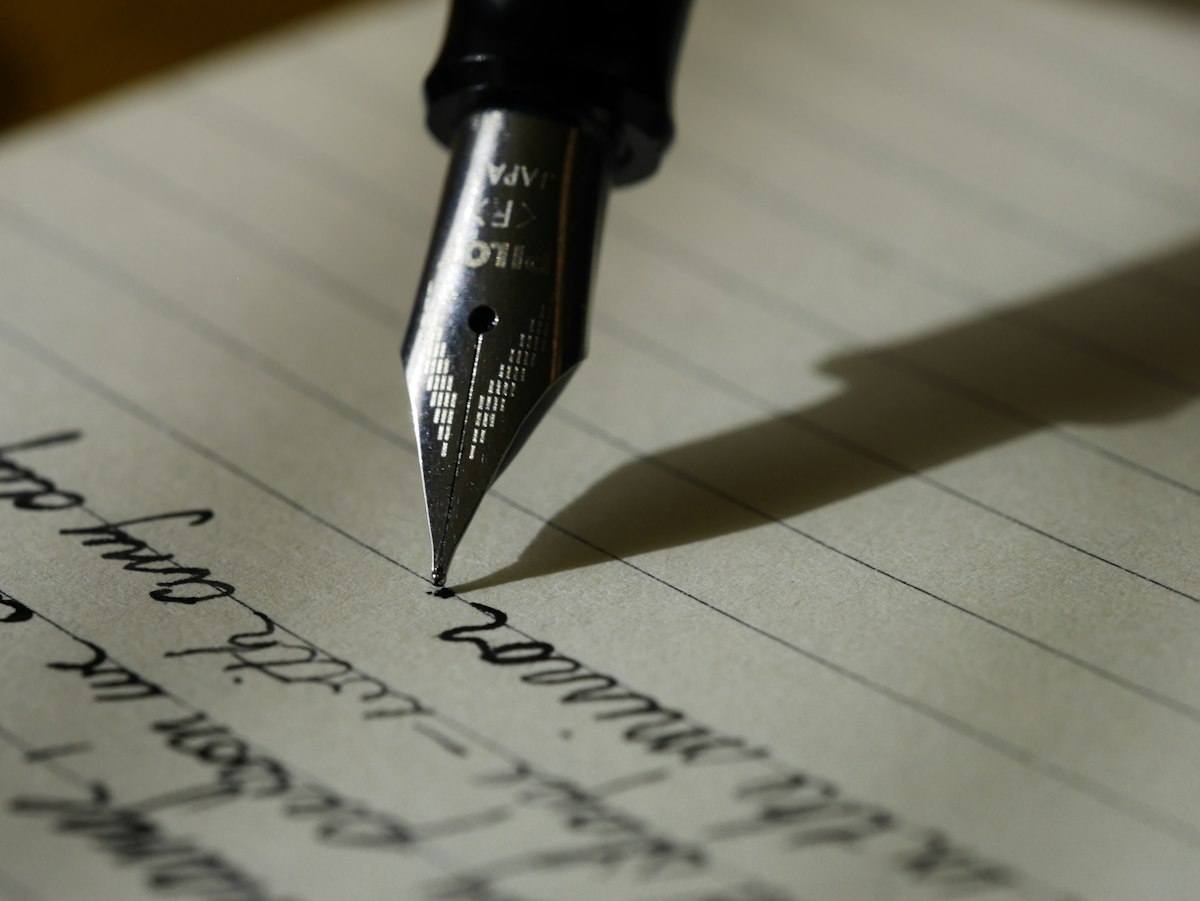
When I wake up, before I unlock my phone, I pick up a notebook that sits on my bedside table and I write one line: the single most important thing I want to accomplish today. Then I put the pen down. That is the entire habit. Two minutes, usually less.
No journaling pages. No gratitude list, unless I feel like it. No meditation app. Just one deliberate sentence that says, in effect, this is what today is about, and I decided it, not my inbox.
The notebook matters more than it sounds. Reaching for paper instead of a screen means I do not open the floodgate of inputs. If I picked up my phone to "write" the line, I would be lost to notifications within seconds. The medium protects the habit.
A two-minute habit fixing an entire day sounds absurd. Here is the mechanism.
First, it is a tiny action that wins the first battle. Habit research is clear that small, easy actions are the ones that survive. James Clear has written at length about how tiny habits compound when they are easy enough to repeat, and two minutes is about as easy as it gets. A two-minute habit has almost no resistance, so you actually do it, every day, which is the only thing that makes a habit real. It is the same logic as asking one focusing question to set the whole day before the noise arrives.
Second, it front-loads intention. By naming your priority before the world intervenes, you walk into the day with a destination. Everything else gets measured against it. When the noise arrives — and it will — you have an anchor.
Third, it builds identity. Every morning you choose your own priority first, you reinforce a quiet belief: I am someone who runs my day, not someone my day runs. That belief compounds far beyond the two minutes.

A habit you forget is not a habit. Here is how I made this one automatic.
Here is the before-and-after that keeps me doing it:
| Phone-first mornings | Notebook-first mornings | |
|---|---|---|
| First mental state | Reactive, scattered | Intentional, calm |
| Who set my priorities | My notifications | Me |
| By mid-morning | Already behind | On track |
| Felt control over the day | Low | High |
This tiny habit taught me something that scales far past mornings.
The order you do things in matters as much as the things themselves. Doing the right thing at the wrong time — like checking email before deciding your priority — quietly sabotages everything after it. Sequence is a hidden lever most people never touch, and it is exactly why doing the hard thing first works so reliably.
It also taught me to protect the start of any process, not just the day. The beginning sets the tone. That is true of a morning, a meeting, a project, even an automated workflow — get the first step right and the rest tends to follow. Two minutes spent at the very front of the day turned out to be the highest-leverage two minutes I have.
A single morning of this proves nothing. The change showed up in the accumulation.
In the first week, the habit felt almost too minor to bother with. Write a line, put the pen down — surely that could not matter. But I noticed something by Friday: I could remember what each day had been about. Normally my weeks blurred into an undifferentiated smear of busyness. Now each day had a spine, a thing it was for.
By the third week, the effect compounded. Because I was naming my priority before the noise, I was actually doing it more often. The line on the page was not just intention — it was becoming completion. And because I started each day in command rather than in reaction, the low-grade morning anxiety I had lived with for years quietly faded. I was no longer waking up already behind.

The most unexpected result was how the habit spread. Choosing my priority first thing made me more aware of priorities all day. I started asking "what is this hour for?" the way I asked "what is this day for?" One deliberate sentence in the morning had trained a muscle that flexed long after the two minutes were over.
I had tried elaborate morning routines before and abandoned every one of them. Understanding why this tiny one survived where the big ones died taught me more about habits than any book.
Big routines fail because they have a high cost and a fragile trigger. Ten steps before 7 AM is a lot to ask of a tired person, and the moment one busy or rough morning breaks the chain, the guilt of "falling behind" makes you abandon the whole thing. The size that makes them impressive is exactly the size that makes them brittle.
This habit survived precisely because it asks for almost nothing. Two minutes is impossible to be "too busy" for. There is no chain to break, no streak to ruin, no elaborate sequence to fail at. On my worst, most chaotic mornings, I can still write one line. And because I never miss it, it never triggers the guilt spiral that kills bigger routines. The smallness is not a limitation. It is the entire reason it works.
If you want to try it, put a notebook by your bed tonight and write one line before your phone tomorrow — and it is worth reading more about the small, durable systems that survive even your hardest days.
Q: Does it really have to be on paper? It does not have to be, but paper keeps you off the screen, and staying off the screen is half the benefit. If you must use a device, open only a blank note and resist everything else. The medium is part of the method.
Q: What if I can't decide on the single most important thing? Write your best guess. The goal is not a perfect choice; it is the act of choosing before the world chooses for you. A rough priority you set yourself beats a perfect one handed to you by your inbox.
Q: Two minutes seems too small to matter. Doesn't it? That smallness is exactly why it works. Big morning routines collapse under busy days; a two-minute habit survives them. Consistency, not size, is what makes a habit change your life.
Q: Can I build other habits on top of it later? Yes, and that is the natural path. Once the two-minute anchor is rock solid, you can attach a stretch, a glass of water, anything. But get the tiny core automatic first — stacking on an unstable base is how routines fall apart.
I did not fix my mornings with a four-step routine or a 5 AM alarm. I fixed them with one sentence, written before I let the world in.
The first thing you do each morning is a vote for who you will be all day. Cast it on purpose.
Tonight, put a notebook by your bed and your phone across the room. Tomorrow, before anything else, write one line. Then watch what two minutes does to the next sixteen hours. What would your line say tomorrow?
I chased big, audacious goals for years and burned out every time. Then I built my whole life around wins so small they felt like cheating.

I spent years thinking I just wasn't a disciplined person. Then I realized discipline is built, not born. Here's how I actually built mine.
You don't lack discipline. You inherited a goal-setting method with a design flaw, and it's been quietly sabotaging you for years.









Comments
Sign in to join the conversation
No comments yet. Be the first to share your thoughts!